
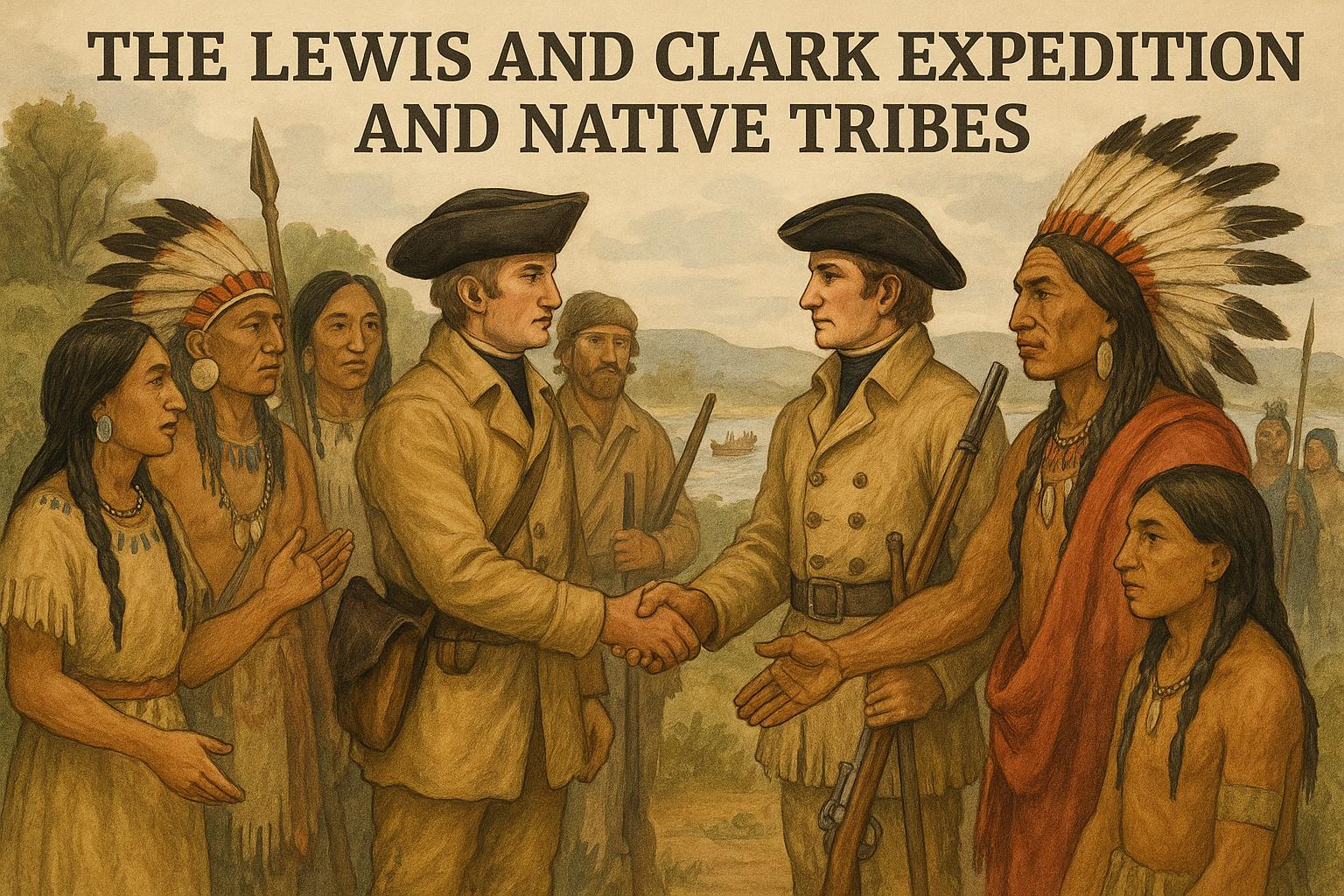
The Lewis and Clark Expedition: An Overview
The Lewis and Clark Expedition, also known as the Corps of Discovery Expedition, stands as a landmark event in the history of the United States. Undertaken by Meriwether Lewis and William Clark, this significant journey spanned from August 31, 1803, to September 25, 1806. The expedition was backed by President Thomas Jefferson following the acquisition of the vast Louisiana Territory. The primary objective of the expedition was multi-faceted: they aimed to explore and map the newly acquired territories, discover a viable route across the western half of the continent, and establish a strong American presence to deter competing European claims.
Encounters with Native Tribes
One of the most critical aspects of the Lewis and Clark Expedition was the series of encounters with various Native American tribes. These interactions played a pivotal role in the success of the journey, as the knowledge and hospitality offered by these tribes were indispensable.
The Role of Native Tribes
The expedition’s survival and success hinged on several key interactions with Native tribes:
The Mandan and Hidatsa: Lewis and Clark established Fort Mandan near what is today North Dakota during the harsh winter of 1804-1805. The Mandan and Hidatsa tribes were instrumental in providing support that allowed the expedition to endure the winter conditions. Their assistance ranged from sharing food supplies to offering guidance about the local geography and climate.
The Shoshone: As the expedition approached the formidable Rocky Mountains, assistance from the Shoshone was crucial. The Shoshone tribe helped them acquire the horses needed to traverse the mountains. Sacagawea, a woman of Shoshone descent, accompanied the expedition and facilitated essential negotiations for securing these animals. Her linguistic skills and cultural knowledge proved invaluable.
The Nez Perce: Upon reaching the other side of the Bitterroot Mountains, the travelers encountered the Nez Perce tribe. This meeting came at a crucial juncture, as provisions were running low, and the expedition members were exhausted. The Nez Perce provided critical food supplies and offered guidance, which enabled Lewis and Clark to continue their westward journey towards the Pacific Ocean.
Communication and Respect
Effective communication with Native tribes was achieved through the use of translators, as well as ceremonial exchanges of gifts. These acts served as gestures of respect and appreciation, fostering mutual understanding and cooperation. The success of these cultural exchanges largely depended on the expedition’s ability to approach interactions with sensitivity and diplomacy, attributes that were vital for establishing trust.
Impact on Native Tribes
While the expedition significantly contributed to American territorial expansion, it also marked the onset of transformative changes for many Native tribes. The increased interaction with settlers that followed the expedition paved the way for the encroachment on indigenous lands and the depletion of resources native peoples had depended on for generations. This development led to profound and often adverse impacts on their cultures, societies, and livelihoods.
Further Exploration
For those interested in a deeper dive into the cultural exchanges and historical consequences of the Lewis and Clark Expedition, a visit to specialized history archives or library collections can be immensely enriching. For instance, institutions like the Library of Congress and the National Archives offer extensive resources that illuminate various aspects of the expedition’s legacy. Additionally, digital resources provide access to collections and scholarly articles that explore the broader historical context and implications of this expansive journey. These explorations underscore the significance of the expedition not only as a feat of exploration but also as a catalyst for both the expansion of a nation and the transformation of indigenous societies.