
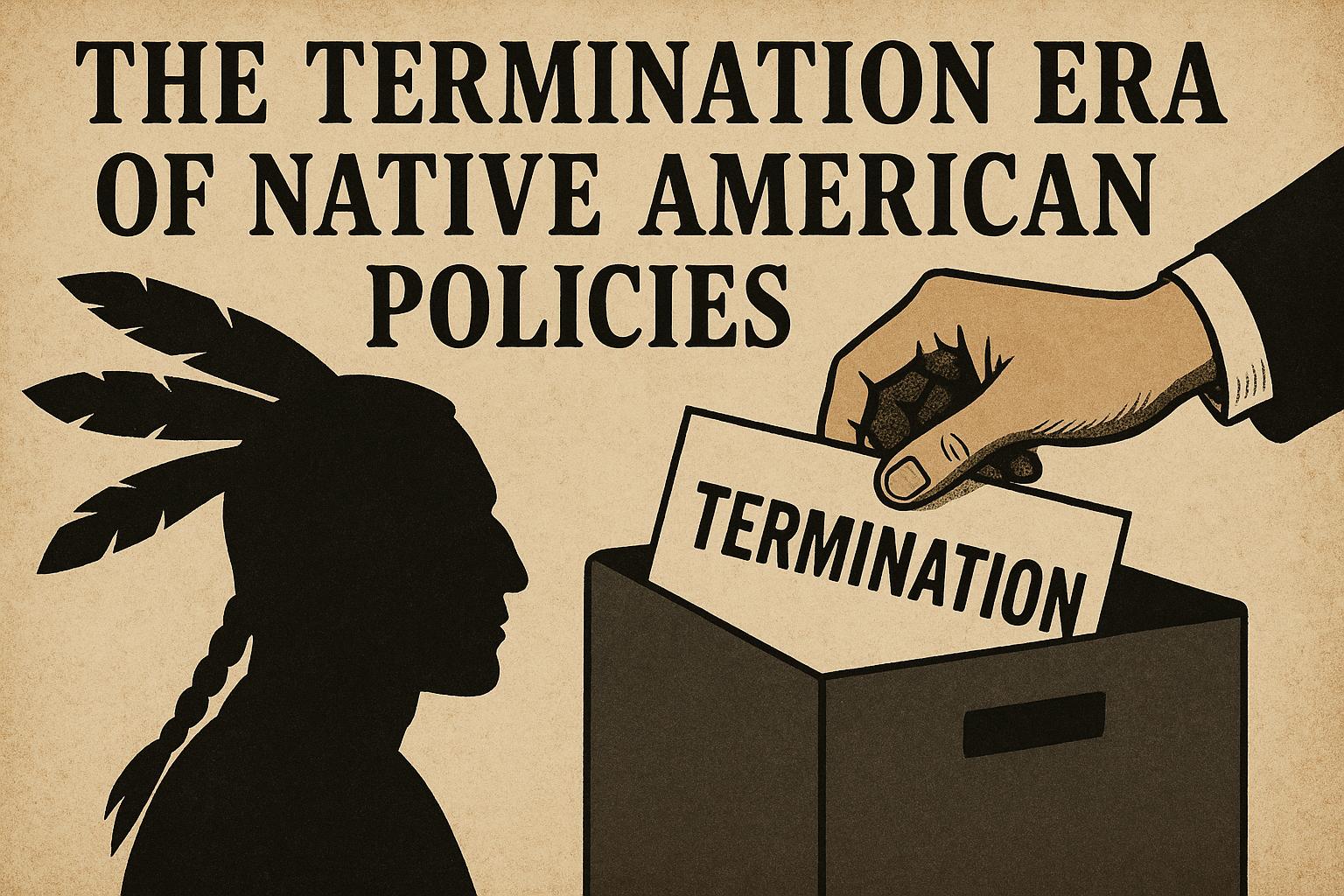
The Termination Era of Native American Policies
The Termination Era represents a significant period in the history of Native American policies in the United States, spanning from the late 1940s to the mid-1960s. During this time, the federal government aimed to assimilate Native Americans into mainstream American society by terminating the recognition of certain tribes and ending their special relationship with the federal government. This era was driven by policies intended to integrate Native Americans into the broader fabric of American life, with far-reaching and often detrimental impacts on Native American communities.
Background
The Termination Era followed the introduction of transformative policies such as the Indian Reorganization Act of 1934, which had aimed to pivot away from assimilation and towards the recognition of tribal sovereignty and self-governance. This act marked a turning point by recognizing the autonomy of tribal governments and encouraging self-determination among Native American tribes. However, by the late 1940s, a contrasting viewpoint gained momentum-a belief that the path forward for Native Americans lay in full assimilation into American society. This perspective was driven by policymakers who posited that by erasing distinctions between Native Americans and other American citizens, including the dissolution of tribal governments and economies, Native Americans could achieve economic self-sufficiency and reduce dependency on federal support.
Implementation of Termination Policies
The formalization of the Termination policy began with House Concurrent Resolution 108 in 1953. This resolution declared the federal government’s intent to nullify its recognition of tribe sovereignty, with aspirations to dismantle tribal trust status that had been a critical part of U.S. interactions with Native American tribes. This process would require tribal members to adhere to the same legal frameworks and responsibilities as other U.S. citizens. As a result, the Termination Act facilitated the enactment of numerous public laws aimed at terminating select tribes.
Key Objectives
The key objectives of termination policies included:
Ending special federal services: The government sought to eliminate the provision of unique benefits and services extended to Native American tribes. The aim was to discontinue programs that provided educational, health, and welfare services exclusive to Indian tribes under federal auspices.
Liquidating tribal lands: Tribal lands, held in trust by the federal government, were intended to be divided, privatized, and transferred to individual ownership or sold. This policy was rooted in the belief that dismantling communal landholdings would encourage personal responsibility and integration into the American economic system.
Facilitating assimilation: An overarching objective was the promotion of Native American assimilation into American society and economy to foster their perceived equality with other citizens. By terminating tribal identity, the expectation was that Native Americans would more easily find a place within broader American society and contribute economically.
Impacts and Consequences
The implementation of termination policies yielded considerable negative consequences for affected tribes. The abrupt withdrawal of federal support triggered severe economic hardship and social instability. Tribes like the Menominee in Wisconsin and the Klamath in Oregon were among the most profoundly impacted. Many tribes lost control of their lands – a vital source of economic activity, cultural identity, and historical heritage. The forcible change in status reduced tribes to nongovernmental entities, severely restricting their ability to self-govern and manage internal affairs.
Subsequently, many tribal members had to relocate to urban areas, purportedly to access more varied employment opportunities. However, they encountered obstacles in assimilating, including discrimination, job insecurity, and loss of community ties. These issues exacerbated poverty within Native American communities and led to a dilution of cultural identity and practices.
The Reversal of Termination Policies
By the 1960s, the observable negative outcomes of the Termination Era led to a reappraisal of federal Indian policies. The challenges and hardships experienced by tribes under termination prompted a gradual policy shift. Notably, this shift was embodied by the Indian Self-Determination and Education Assistance Act of 1975. This legislative measure signaled a pivotal change, emphasizing the importance of tribal self-governance and aiming to restore the sovereignty that had been undermined during the Termination Era.
The conclusion of the Termination Era marked a crucial turning point in the realm of federal-tribal relations. New policies focused on rebuilding the commitments of the federal government to honor past treaties and encourage self-determination, allowing Native American communities to manage their internal affairs with greater autonomy.
Continued Challenges
While the policy reversal marked progress, significant challenges persist for Native American tribes as they seek to recover from the Termination Era’s legacy. A substantial effort continues as tribes endeavor to reclaim economic stability, reconstruct tribal institutions, and preserve their cultural heritage. Many tribes also continue to negotiate for redress concerning the substantial financial and cultural losses incurred during the Termination Era.
Partnerships among federal, state, and tribal governments remain crucial in addressing the multifaceted and ongoing issues arising from the Termination Era. Collaborations focused on rebuilding trust, fostering cooperation, and enabling sovereignty and self-determination are indispensable for improving conditions for Native American communities. Addressing the historical injustices faced by Native American tribes requires a sustained and cooperative effort from all stakeholders involved.
For further reading about the impact of the Termination Era on specific tribes, visit this resource. Understanding this era is crucial for comprehending the ongoing struggles and achievements of Native American communities today and contributes to a fuller recognition of the complexities surrounding American Indian policy and history.