
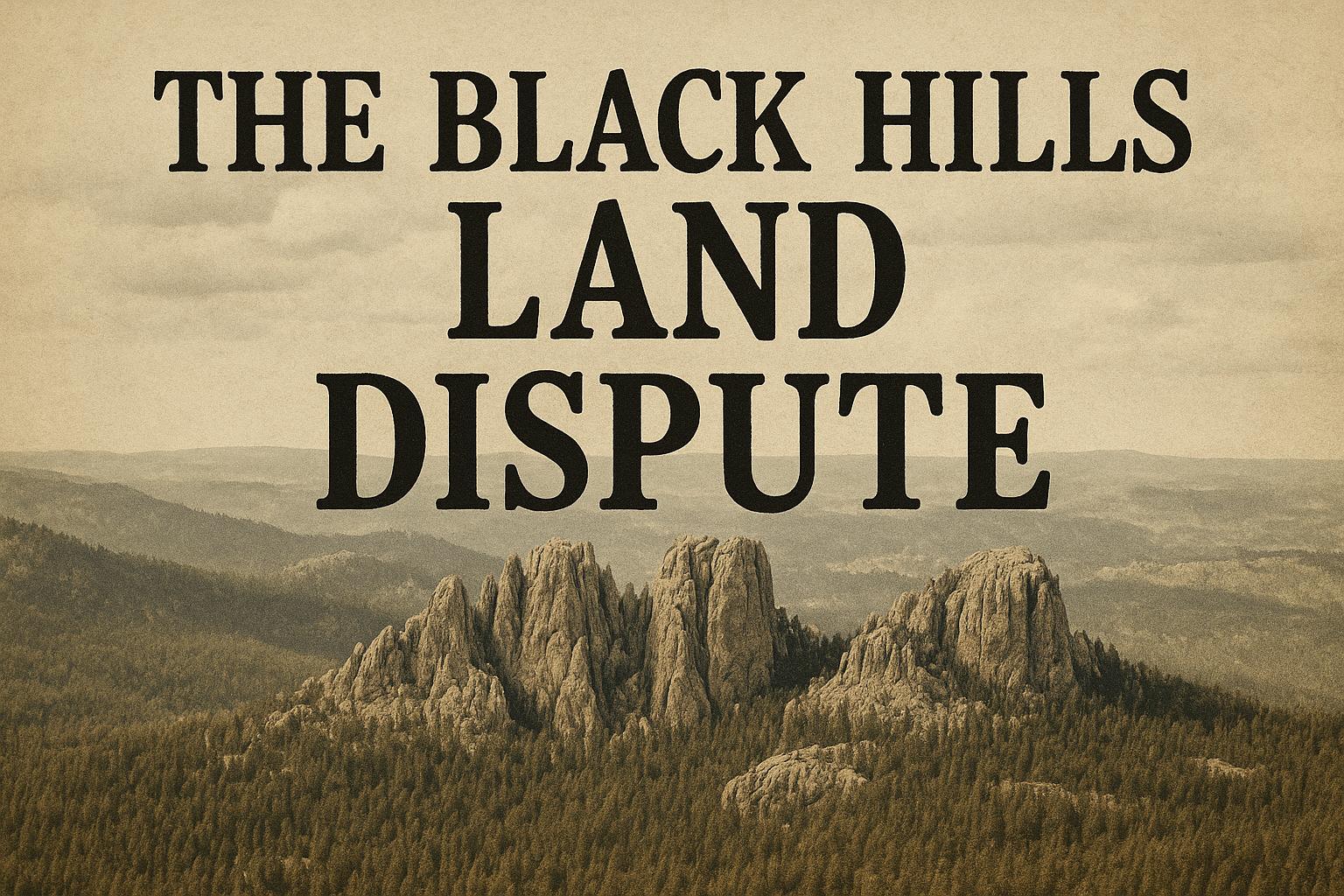
Background of the Black Hills Land Dispute
The Black Hills land dispute remains a deeply complex and historically rooted conflict between Native American tribes, predominantly the Lakota Sioux, and the United States government. This conflict over the Black Hills, a region laden with both mineral wealth and profound cultural significance, primarily revolves around issues of land ownership and rights. The Black Hills are located in South Dakota, and their contested ownership has led to ongoing challenges and negotiations, reflecting broader themes of Indigenous lands and sovereignty struggles in the United States.
Treaty of Fort Laramie (1868)
The roots of the Black Hills land dispute can be traced back to the Treaty of Fort Laramie, signed in 1868. This treaty was a significant milestone in Native American and U.S. government relations because it officially recognized the Sioux Nation’s ownership of the Black Hills along with a vast stretch of territory in the regions now known as South Dakota, Wyoming, and Montana. The agreement established the Great Sioux Reservation, ostensibly protecting these lands from encroachment and ensuring that they remained under the control of the Sioux tribes.
At the time, the Treaty of Fort Laramie represented a pivotal moment of attempted reconciliation and peace between the U.S. government and Native American tribes. However, it was fraught with challenges right from its inception. Despite the clear terms of the treaty, which were meant to prevent further settler intrusion and to secure the sovereignty of the Sioux over these territories, the subsequent events soon led to its violation.
Discovery of Gold and Breach of Treaty
The unearthing of gold in the Black Hills during the mid-1870s marked a turning point that dramatically disrupted the stipulations of the Treaty of Fort Laramie. The allure of gold enticed a large number of prospectors and miners into the area, driven by the promise of wealth and prosperity. This gold rush, fervent and relentless, resulted in an influx of settlers who disregarded the protections guaranteed by the treaty.
Faced with this encroachment, the U.S. government sought to resolve the situation by attempting to purchase the Black Hills from the Sioux. However, the Sioux staunchly refused to sell the land, valuing it not only for its material resources but also for its deep-rooted cultural and spiritual importance. Despite the refusal, the U.S. government ultimately seized the Black Hills, leading to a clear breach of the 1868 treaty and sowing the seeds for prolonged legal and moral battles.
Legal Battles and Court Decisions
The legal confrontations over the Black Hills have been enduring and complex, gaining momentum notably in the 20th century. A landmark decision in this ongoing saga came with the 1980 U.S. Supreme Court case United States v. Sioux Nation of Indians. This ruling confirmed the unlawful seizure of the Black Hills by the U.S. government and decreed an award of over $100 million as financial restitution to the Sioux tribes.
However, this decision, while momentous, did not settle the dispute. The Sioux tribes elected to reject the monetary settlement, emphasizing that no financial compensation could substitute for the return of their ancestral lands. Their refusal underscores a fundamental aspect of this issue: the intrinsic value and significance of the land to their culture and identity far exceed any financial valuation.
Ongoing Negotiations and Cultural Importance
The Black Hills hold profound cultural and spiritual importance for the Lakota Sioux and numerous other Native American tribes. This significance adds layers of complexity to the negotiation processes, as the discourse involves not merely legal or financial considerations but also delves into issues of cultural heritage and spiritual rights.
Negotiations continue as the Sioux persist in seeking the return of their land, rather than accepting any form of financial compensation. These ongoing discussions reveal broader societal conversations about land rights, justice, and recognition for Indigenous peoples in the U.S. and highlight the intricacies involved in reconciling historical injustices.
For many Native American communities, the Black Hills are not just a parcel of land but a sacred place, integral to their traditions, stories, and ways of life. This perspective challenges conventional legal and property paradigms, proposing instead a view of land as a living, sacred entity that is fundamentally inseparable from cultural identity and spiritual practice.
Current Status and Future Prospects
Presently, the Black Hills land dispute remains unresolved, a testament to the enduring complexity of reconciling historical treaties with modern-day legal frameworks. The monetary compensation awarded by the court decision of 1980 has accrued significant interest, ballooning the financial settlement amount substantially. Nonetheless, the underlying contention remains: the Sioux tribes continue to refuse this compensation, maintaining their demand for the physical return of the Black Hills.
Looking forward, discussions about land rights and reparations, as well as the preservation of cultural heritage, persist as central themes in the relationships between the U.S. government and Native American tribes. The outcome of this ongoing dispute has the potential to influence broader policies and precedents regarding Native American land claims and rights.
Future resolutions will likely require navigating complex negotiations, integrating not only legal and political considerations but also cultural and spiritual dimensions. Any settlement will necessitate a profound understanding of the historical context and a recognition of the intrinsic value that the Black Hills possess for the Native American communities involved.
For those seeking deeper insight into the Black Hills land dispute, numerous resources are available through organizations dedicated to Native American rights, historical research, and advocacy. These sources offer comprehensive perspectives and analyses of the multifaceted issues at play, providing valuable information for understanding the complexities involved in this ongoing dialogue.