
Introduction
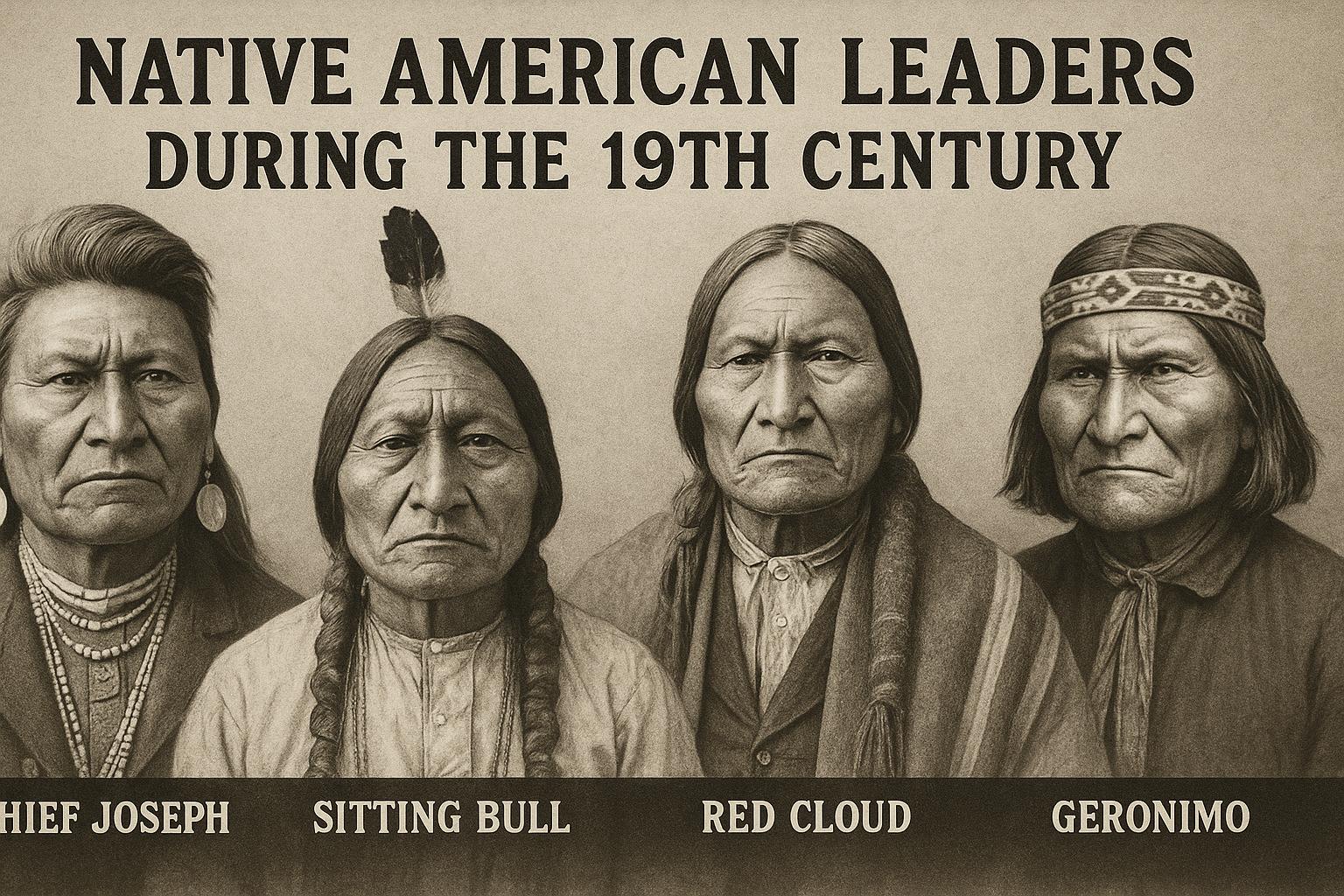
The 19th century in the United States was marked by significant changes and conflicts between the Native American tribes and the expanding American frontier. It was a period during which Native American lands were increasingly encroached upon by European settlers and the U.S. government, leading to a host of conflicts and forced relocations known as the Indian Removal. Despite facing these formidable challenges, numerous Native American leaders emerged who played pivotal roles. They not only advocated for their people but also actively resisted displacement and fought to preserve their cultures. This discussion will delve into the lives and contributions of a few notable figures from this transformative era for Native American tribes.
Sitting Bull
Sitting Bull, born in 1831, was a renowned leader of the Hunkpapa Lakota Sioux. His legacy is most famously associated with his leadership during the Battle of the Little Bighorn in 1876, where he emerged as a critical figure. Sitting Bull was not only a military leader but also a revered spiritual guide and visionary. His powerful influence united the Sioux tribes against U.S. military forces, which culminated in what is known as Custer’s Last Stand. Though his strategies led to victory in that battle, Sitting Bull later faced mounting pressures that ultimately led him across the border into Canada.
Leadership and Legacy
Beyond his military achievements at the Battle of the Little Bighorn, Sitting Bull’s leadership had a profound impact on the broader struggle of Native American tribes to maintain their sovereignty and cultural identity. He symbolized the enduring resistance against the incursions into ancestral lands and sought to uphold his people’s way of life. Despite facing numerous adversities, including subsequent relocation and a demand to cede his lands, Sitting Bull’s legacy remains a testament to the unwavering spirit of the Native American struggle. He left behind a rich history of resistance and is remembered for his steadfast resolve in the face of seemingly insurmountable challenges.
Geronimo
Geronimo, born in 1829 as Goyahkla, became a formidable leader of the Apache tribe. He is etched in history as a symbol of fierce resistance against both Mexican and American military forces. Geronimo devoted his life to fighting the encroachment on Apache lands and is noted for his unyielding defiance.
Military Struggles
Throughout his life, Geronimo engaged in a series of raids and skirmishes, largely motivated by personal tragedy and loss. The violent death of his family members instilled in him a deep sense of resistance. Despite leading a relatively small group of followers, he demonstrated remarkable strategic acumen, allowing him to evade capture for many years. Geronimo’s eventual surrender in 1886 represented a turning point, effectively marking the end of organized Native American armed resistance in the Southwest United States. While his capitulation marked a significant moment in history, Geronimo’s enduring legacy is characterized by his relentless pursuit of justice and freedom for his people.
Chief Joseph
Chief Joseph, a prominent leader of the Nez Perce tribe, is remembered for his courage, dignity, and strategic insights during the Nez Perce War of 1877. Facing relentless pressure from the U.S. government to relocate his people onto a reservation, Chief Joseph led his followers on an arduous journey in a bid for freedom.
Flight and Surrender
The Nez Perce trek, a testament to Chief Joseph’s leadership, spanned over 1,400 miles in an attempt to seek asylum in Canada. Throughout this journey, the tribe engaged in strategic battles and negotiations with U.S. military forces. Unfortunately, they were forced to surrender just forty miles from the Canadian border. Chief Joseph’s surrender speech, famously dubbed “I Will Fight No More Forever,” served as a poignant plea for peace and justice, highlighting his sorrow over the plight of his people and his hope for their future. His words encapsulated the emotional and moral struggle faced by Native Americans during this era.
Conclusion
The 19th century was undeniably a crucial period for Native American leadership, as it witnessed the emergence of leaders who exemplified extraordinary courage and resilience. Figures such as Sitting Bull, Geronimo, and Chief Joseph highlighted the enduring spirit and determination of Native American communities as they faced overwhelming challenges. These leaders’ stories remind us not only of the battles that were fought but also of the cultural and spiritual endurance that characterized Native American societies during this turbulent era. Their legacies continue to be celebrated as symbols of resistance and perseverance, representing the ongoing journey of Native Americans in the United States. As history reflects on their contributions, the significance of their roles resonates today, reminding us of the sacrifices made and the indomitable spirit that has defined their communities.