
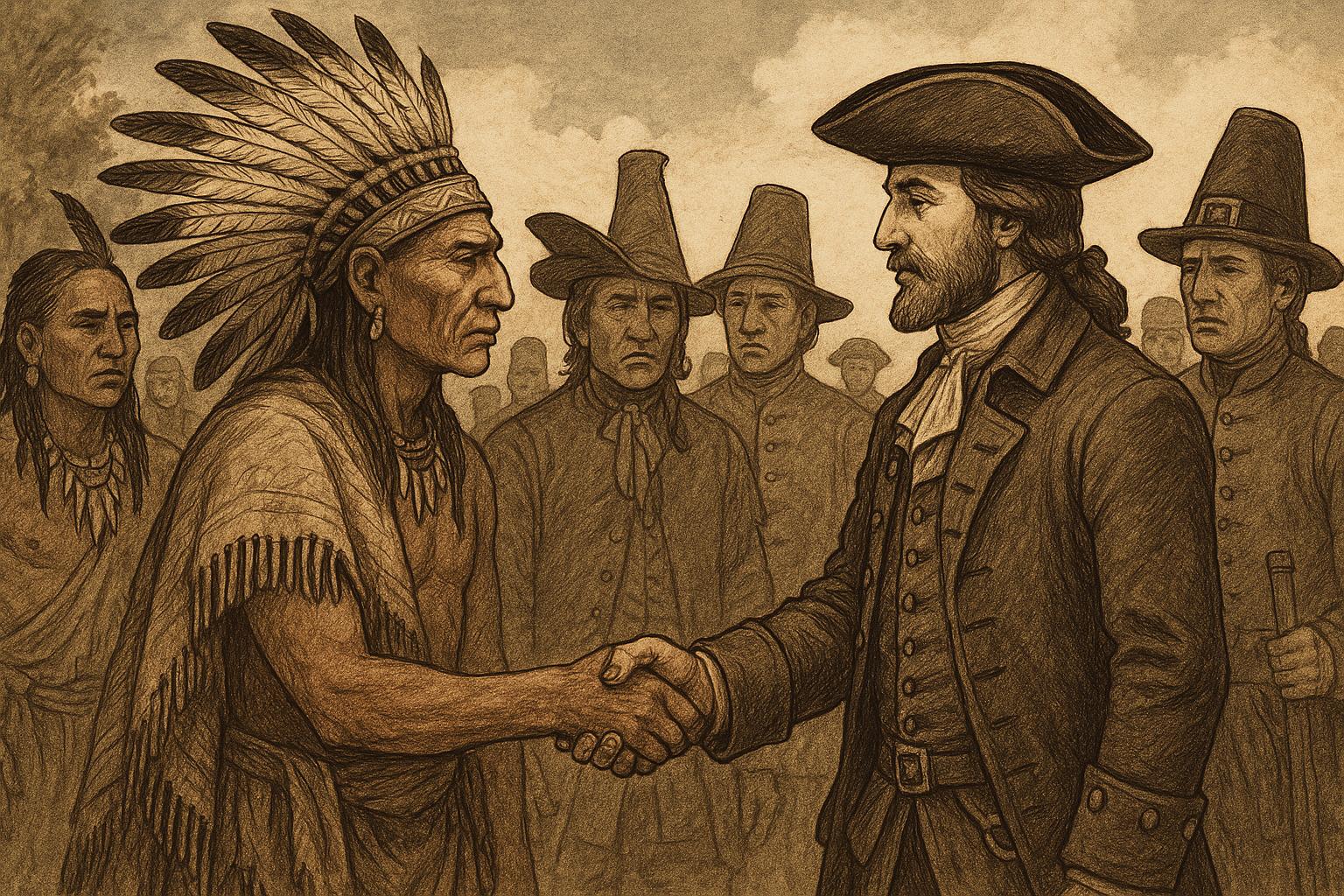
Understanding Early Encounters between Native Americans and British Colonizers
In the early stages of colonization, the relationships between Native Americans and British settlers were complex and multifaceted. These interactions were marked by a variety of exchanges, both constructive and destructive, which would come to define future relations.
Initial Contact and Cooperation
When British colonizers first arrived in North America, their survival depended significantly on cooperation with Native American tribes. This cooperation was not just a matter of convenience but rather a necessity for the British, who found themselves in a land with which they were largely unfamiliar. The natural environment, with its diverse climates and landscapes, required adaptation that the British were ill-prepared for. Consequently, they relied heavily on Native American knowledge for sustenance and survival. With agricultural challenges looming, the expertise of Native tribes in hunting, gathering, and farming offered the British a lifeline. Techniques for cultivating crops such as corn and tobacco, which were new to the settlers, were shared and exchanged.
Furthermore, alliances were not merely transactional but also strategic. Many Native tribes engaged with the British, not solely to learn new agricultural techniques, as often portrayed, but also to form alliances against rival tribes. The geopolitical landscape was fraught with inter-tribal rivalries and European powers vying for dominance, compelling Native tribes to navigate a complex web of alliances and enmities. This early period demonstrated a level of cooperation, albeit tentative, that would significantly diminish over time as colonial expansion reshaped the nature of these relationships.
Trade and Economic Relations
Trade quickly emerged as a critical component of early interactions between Native Americans and the British. The exchange of goods such as metal tools, firearms, and textiles from the British in return for furs and other natural resources held mutual benefits initially. Native Americans gained access to European manufactured items that were otherwise unavailable, potentially enhancing their capacity for labor and defense. For the British, the acquisition of fur pelts was highly lucrative, feeding the demand in European markets.
However, this trade, initially beneficial, began to sow seeds of longer-term dependency and economic disruption within Native American communities. The influx of European commodities altered Native American social structures and ways of life. Where self-reliance had been a central tenet, dependency on European goods slowly seeped into tribal economies, affecting social hierarchies, labor division, and even altering traditional craftsmanship as European items replaced indigenous ones.
Impact of Disease
Perhaps one of the most devastating impacts of early contact was the introduction of European diseases. Native American populations, having no previous exposure to diseases such as smallpox, measles, and influenza, suffered severe declines as these illnesses spread rapidly through tribes with no immunity. The impact was catastrophic, with significant reductions in population, at times wiping out entire communities. This demographic collapse weakened many tribes, making it increasingly difficult to resist further encroachment and exploitation by settlers. The loss of life disrupted social continuity, with cultural practices and traditions sometimes ending abruptly as elders perished.
Land Conflicts and Treaty Making
The British colonial expansion brought with it a voracious demand for land, igniting numerous conflicts with Native American tribes. These conflicts often stemmed from deeply rooted differences in conceptions of land ownership and use. While many Native tribes held views that were centered around a communal approach to land, where it was seen as a shared resource for the benefit of the whole community, British settlers had a vastly different perspective. The notion of individual land ownership, demarcation, and transfer was alien to many tribes.
Treaties were often the tools through which land was acquired, albeit frequently under conditions unfavorable to Native Americans. Many treaties were signed under duress, misrepresented, or not fully understood by tribal leaders due to language barriers or deceit. As a result, large territories were ceded, furthering displacement and loss of traditional lands, which had deep spiritual and cultural significance to the tribes.
Shifts in Power Dynamics
The shifting power dynamics of this era were further complicated by the strategic alliances and hostilities formed between different tribes and European colonizers. Various Native American tribes aligned themselves with either the British or other European powers such as the French, based on strategic interests. Tribes sought to leverage their alliances to protect their lands and autonomy amidst growing European encroachment. Conflicts like the French and Indian War epitomized these non-static alliances, where loyalty could shift based on the pressures and promises from colonial powers.
Cultural Impact and Assimilation Pressures
As colonization progressed, pressures of cultural assimilation became more pronounced. British colonizers, operating under eurocentric worldviews, often perceived Native American cultures as inferior, necessitating a ‘civilizing’ mission. This mission often manifested through efforts to convert Native American populations to Christianity and to instill European cultural practices and values. Missions and schools were established with the objective of educating and converting Native American children, hitching their cultural identity to new religious and social norms. This exerted considerable pressure, contributing to cultural erosion and loss for many tribes, as traditional practices and languages were replaced or diluted.
Legacy of British-Native American Relations
The legacy of British colonization has had enduring consequences on Native American populations. Initially marked by trade and cooperation, interactions between the British settlers and Native Americans gradually gave way to conflict, displacement, and cultural disruption. The policies and treaties implemented during this period laid a foundational groundwork for ongoing challenges encountered today related to sovereignty, land rights, and cultural preservation. The European colonization, with its accompanying paradigms, fundamentally altered the trajectory of Native American populations and their heritage, leaving a complex historical tapestry that continues to be studied and debated.
For more detailed historical accounts, consider exploring resources dedicated to Native American history from university or specialized library collections.