
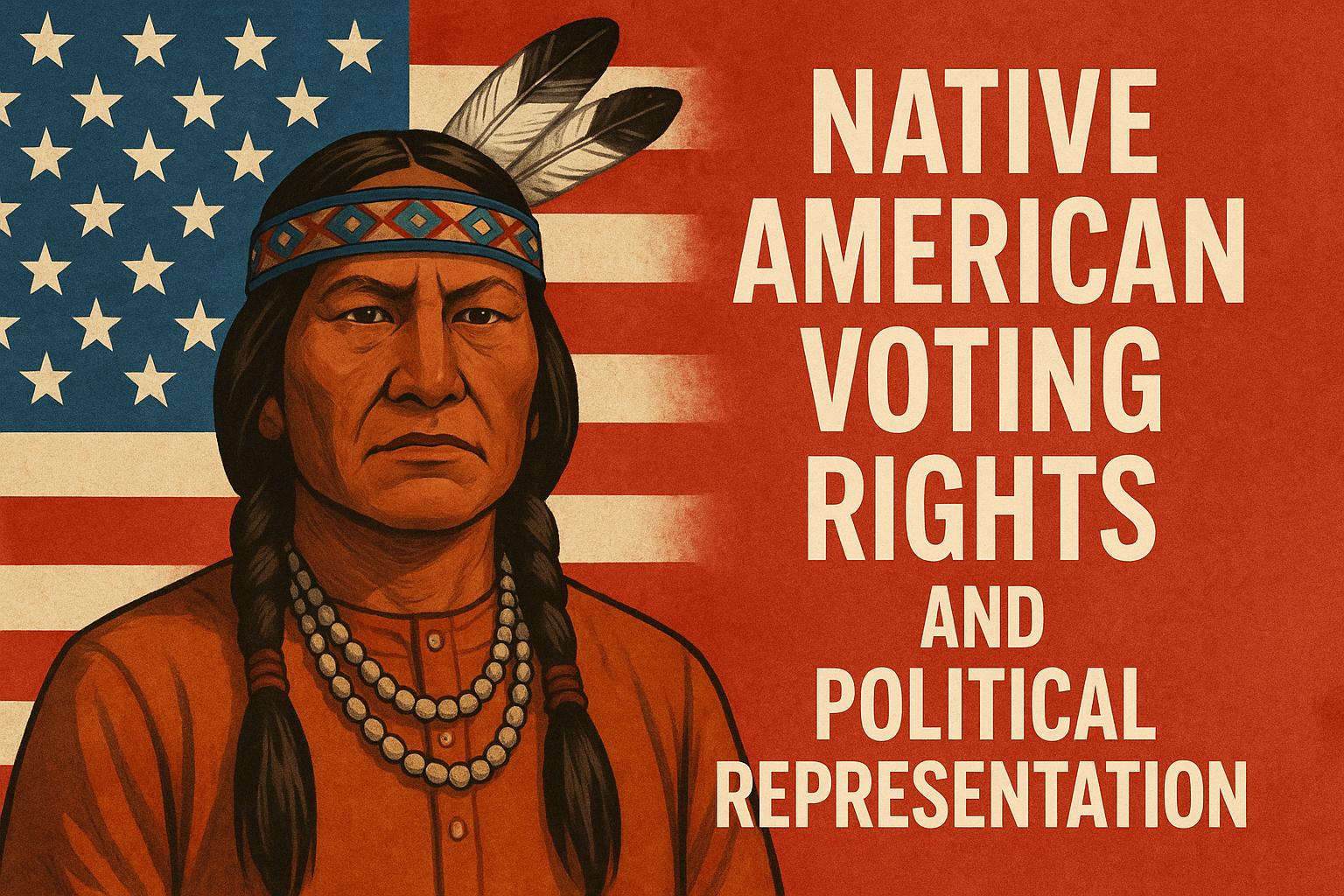
Understanding Native American Voting Rights
Native American voting rights have been a complex and evolving aspect of U.S. history. Initially, Native Americans were not considered U.S. citizens and therefore could not vote. Citizenship for Native Americans was only recognized in 1924 with the passage of the Indian Citizenship Act. However, legal recognition did not immediately translate into voting rights.
Historical Barriers to Voting
The pathway to securing voting rights for Native Americans was neither straightforward nor swift. Even after gaining U.S. citizenship, numerous impediments were strategically placed at the state level to disenfranchise Native voters. These restrictions often exploited legal loopholes and manipulated existing discriminative structures, effectively suppressing Native American electoral participation.
Among these tactics were literacy tests and residency requirements, legislative tools that were broadly applied to hinder access to the ballot. Additionally, poll taxes served as a more direct economic barrier to voting, disproportionately impacting poorer communities, including Native Americans. The imposition of residency requirements was particularly insidious given the unique living arrangements on reservations, making it arduous for many to meet the stipulated criteria.
Remarkably, it wasn’t until 1948 that New Mexico became the last state to grant Native Americans the formal right to vote by eliminating specific legal barricades. This delayed inclusion reflects the prolonged struggle and resistance to incorporating Native Americans into the full democratic process of the country.
Current Challenges
Despite the hard-won battles of the past, Native American communities continue to confront a range of contemporary challenges in exercising their voting rights. At the forefront is the issue of limited access to polling stations. For many Native Americans residing in remote or rural areas, reaching a designated polling place is logistically challenging, often involving long distances that are impractical for regular travel.
The question of gerrymandering—the deliberate manipulation of electoral district boundaries—also looms large. Such practices can dilute the voting power of Native communities, making it harder for them to elect representatives who genuinely reflect their interests. Coupled with these are stringent voter ID laws, which can act as a prohibitive hurdle for individuals lacking conventional forms of identification, further reducing voter turnout.
Efforts to Improve Access
In response to these pervasive barriers, numerous initiatives have emerged to restore and expand voting access for Native American communities. Key among these efforts are the actions of organizations and advocacy groups dedicated to preserving democratic participation. These entities are actively engaged in undertaking legal challenges to counteract restrictive voting laws and practices that discriminate against Native voters.
Furthermore, concerted voter education campaigns seek to equip Native Americans with the knowledge necessary to navigate the voting process, thereby empowering them with their electoral rights. Parallel to these informational drives is the establishment of satellite voting stations on reservations or in remote areas, a practical solution aimed at mitigating geographical challenges.
For those interested in learning more about the proactive measures and legal struggles surrounding Native American voting rights, organizations like the Native American Rights Fund’s Native Vote provide extensive resources and updates.
Political Representation of Native Americans
While voting forms the bedrock of political engagement, achieving representation in government remains another crucial aspiration for Native American communities. Historically, these communities have been significantly underrepresented across all tiers of governmental roles, from local to national levels.
Trends in Representation
Encouragingly, recent years have witnessed a discernible shift, characterized by an increase in Native American individuals stepping forward as candidates for political office. This upsurge mirrors a broader trend of growing political awareness and mobilization among Native populations, coupled with an enhanced drive to assert their presence within the political sphere.
Native candidates have demonstrated notable success across various levels of governance, from local school boards to seats in the U.S. Congress. Such achievements underscore an ongoing commitment to augmenting the community’s political voice and influence within the broader U.S. political system.
Significant Milestones
One landmark event in this evolving landscape occurred in 2018, when Deb Haaland and Sharice Davids were elected as the first Native American women to serve in the U.S. Congress. This milestone represented not merely an individual triumph but a broader victory for representation and advocacy, heralding a new era of heightened visibility for Native American issues at the federal level.
The Role of Indigenous-led Organizations
Integral to this progress are the efforts of Indigenous-led advocacy organizations. These entities serve as vital supporters for aspiring Native American politicians, offering a suite of resources, training, and platforms needed to bolster candidacies. Through their tireless work, these organizations are effectively bridging the representation gap, ensuring that Native voices find a place in the corridors of power.
For those interested in delving deeper into the political advancements of Native Americans, the National Congress of American Indians offers a wealth of resources and insights.
By developing a nuanced understanding of both the historical context and the present political landscape, one gains valuable insights into the progress achieved as well as the enduring challenges that Native American voting rights and political representation continue to face. This ongoing journey underscores the critical importance of fostering inclusive political processes that honor and reflect the diversity of all American communities.