
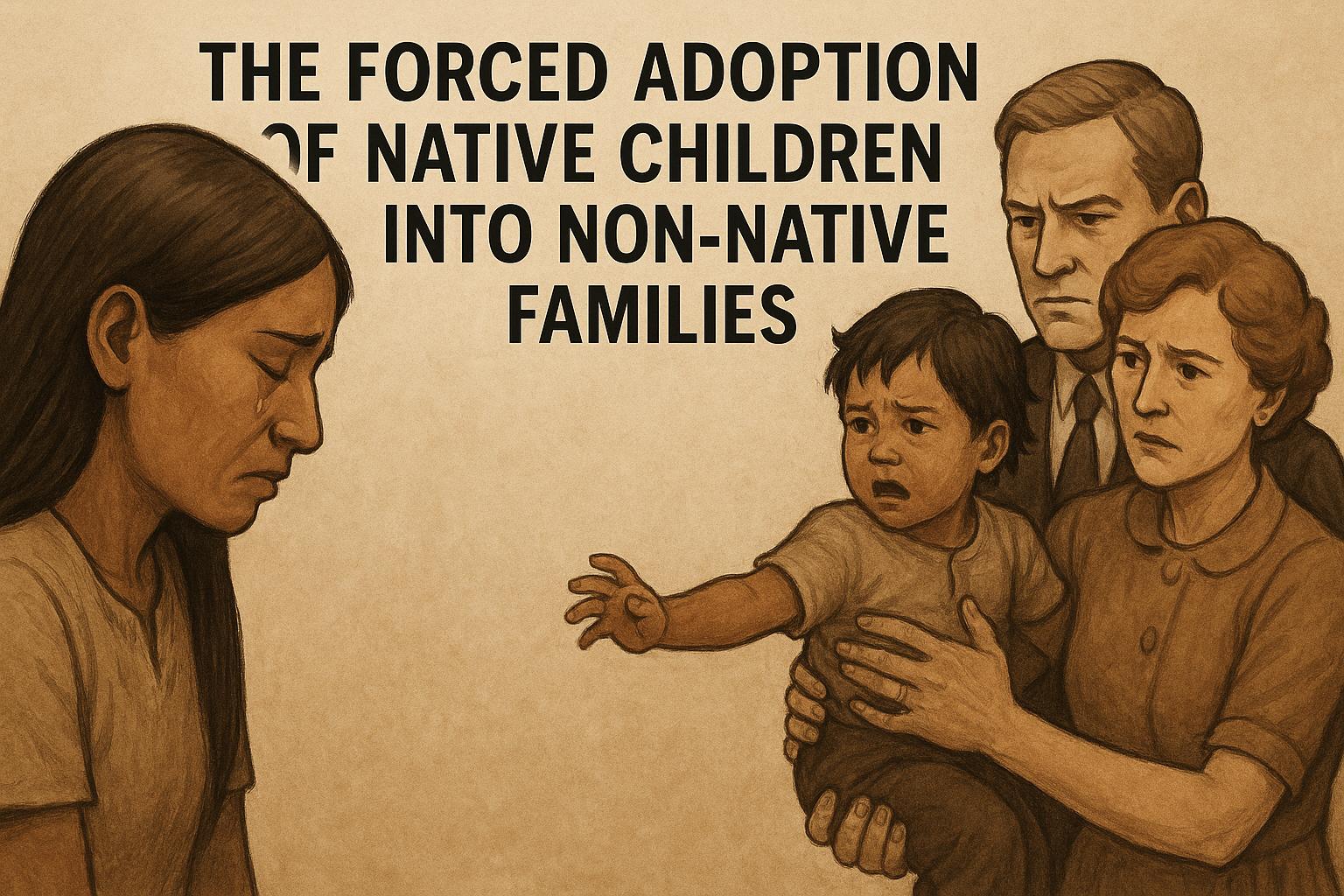
The Historical Context of Forced Adoption of Native Children
The forced adoption of Native American children into non-Native families represents an essential aspect of U.S. history, notable for its profound impact on Native communities and its connections, deeply rooted in colonial policies and assimilation efforts. This controversial practice was systematically employed for decades by various governmental and private organizations that facilitated the removal of Indigenous children from their families and communities. These actions were a part of larger efforts to assimilate Native peoples into broader American culture, reflecting a widespread attempt to reshape their identities and erase their traditions.
U.S. Government Policies
One of the key elements in this historical context includes the policies implemented by the U.S. government, which were instrumental in promoting the assimilation strategies. The Indian boarding school initiative, commenced in the late 19th century, serves as a glaring example. During this period, the government established a series of boarding schools designed to immerse Native American children in white American society, intending to substitute Indigenous cultures with Western norms and values. At these institutions, children were strictly prohibited from speaking their native languages, practicing their traditions, or engaging in cultural expressions unique to their heritage. The overarching objective was to sever the children’s connections to their cultural roots, thereby smoothing the path for their integration into mainstream American culture.
Continuing into the 20th century, the Bureau of Indian Affairs initiated the Indian Adoption Project in 1958. This endeavor further institutionalized efforts to place Native American children in non-Native families. The project was promoted under the guise of providing more stable homes and better opportunities for the children, often overlooking the significant cultural and emotional repercussions of removing them from their Indigenous communities. The rhetoric used often masked the larger agenda of assimilation, suggesting a purported benefit to the children while systematically undermining the cultural integrity and cohesion of Native American societies.
The Role of the Indian Child Welfare Act (ICWA)
By the 1970s, the cumulative effects of these policies had become increasingly apparent. The disruption and harm caused to Native communities were undeniable, leading to growing momentum for legislative change. A vital turning point came with the enactment of the Indian Child Welfare Act (ICWA) in 1978. This landmark federal law was designed to address the adverse impacts of prior policies by safeguarding the best interests of Native American children and promoting stability and security in Native families and tribes.
Under ICWA, specific procedural safeguards were established to prevent the unwarranted removal of Native children from their cultural environments. The act emphasized the importance of prioritizing kinship connections, mandating preference for placing Native children with relatives, fellow tribe members, or other Native families in situations where foster care or adoption became necessary. This approach was intended to preserve cultural continuity for the children and maintain the integrity of Native societies.
The enactment of ICWA addressed some of the historical injustices, serving as a legislative commitment to rectify past wrongs. For those interested in exploring its implications further, information can be sourced through the Indian Child Welfare Act.
Ongoing Challenges
While ICWA marked significant progress in reevaluating and redefining policies toward Native American families, various challenges continue to hinder its full realization. Compliance with the provisions of ICWA remains uneven across state lines. Some states, limited by resources and administrative capacity, struggle to enforce the law effectively, leading to inconsistent application and outcomes.
The complexities surrounding the law often result in protracted legal battles, as decisions regarding the application of ICWA frequently end up being contested in courts. Misinterpretations and non-compliance issues contribute to an ongoing reality where Native children remain vulnerable to the risk of being separated from their families under conditions that can contradict both the spirit and letter of the act.
Furthermore, societal misconceptions about Native cultures and legal mechanisms like ICWA perpetuate barriers to effective implementation. A lack of cultural awareness and sensitivity can exacerbate misunderstandings, ultimately influencing decision-making processes that directly affect Native communities.
Conclusion
The forced adoption of Native children remains both a painful and controversial chapter in the history of U.S.-Native relations. While legislative measures such as the Indian Child Welfare Act were introduced to mitigate the historical and ongoing damage of these policies, the legacy of past injustices continues to reverberate through Native communities today. Acknowledging and understanding these historical contexts is crucial for promoting reconciliation and ensuring the enduring protection of Indigenous cultures and rights. By fostering an informed dialogue and engaging with the historical narrative, society can work toward healing and establishing a future where Native communities are empowered to preserve and uphold their cultural identities in the face of past adversities.