
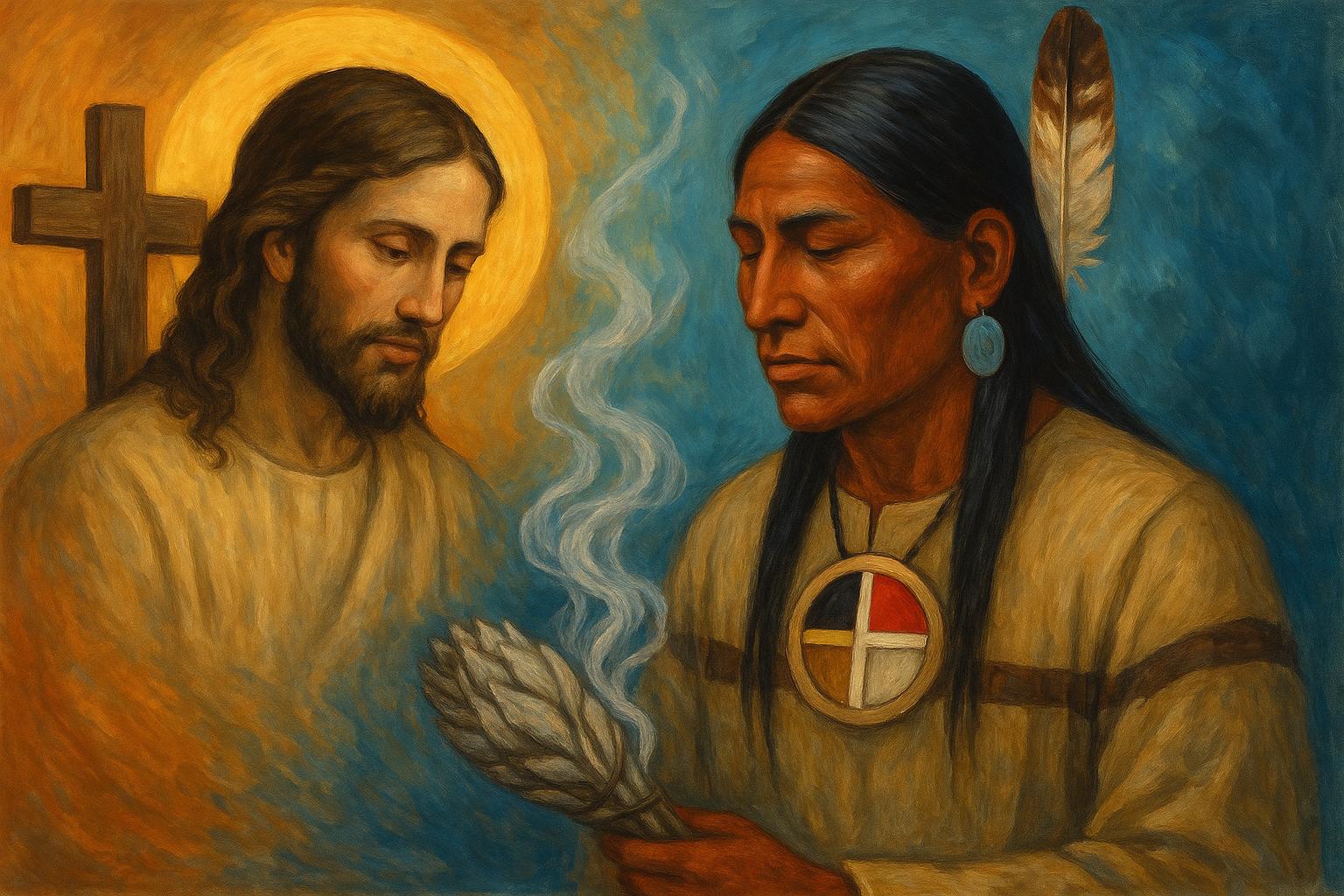
The Historical Context
Christianity’s influence on Native spirituality began with European colonization in the 16th century, a period marked by a significant shift in the cultural and spiritual landscapes of the Americas. The arrival of Europeans brought not only new technologies and trade but also a very different set of religious beliefs that had a profound impact on indigenous communities. Europeans saw it as their mission to spread Christianity, often viewing this as a moral imperative or divine mandate. The complex interweaving of religious traditions that ensued was characterized by both conflict and adaptation.
Missionary Efforts and Conversion
Missionaries were at the forefront of the efforts to convert Native Americans to Christianity. These individuals and organizations established missions—centers for religious, cultural, and educational exchange—across the continent. The primary intent was to evangelize and bring what they perceived as Christian enlightenment to Native populations. It involved significant efforts to replace or suppress indigenous spiritual practices, seen as pagan or heathen by the missionaries.
The Jesuits, Franciscans, and other religious orders played critical roles in building churches and schools designed to inculcate Christian doctrines. The goal was often to educate Native American youths in Christian teachings, sometimes at the cost of their native languages and spirituality. However, conversion was not uniformly effective. While some individuals fully embraced Christianity, many Native Americans engaged in syncretism—a blending of Christian elements with their spiritual framework. This allowed them to maintain their spiritual heritage while selectively adopting aspects of Christianity.
Changes in Religious Practices
The introduction of Christianity led to significant transformations in Native religious practices. Tribes across North America reacted in varied ways. For example, the Ghost Dance Movement, prevalent among the Plains Indians in the 19th century, illustrates a fusion of Christian and Native prophecies. This movement arose as a spiritual response to displacement and cultural erosion, incorporating Christian apocalyptic motifs into indigenous prophecy as part of a hopeful vision to restore their way of life.
Furthermore, Native tribes began to incorporate Christian symbols and narratives into their own spiritual activities. Certain Christian sacraments and holidays were adapted to fit indigenous rituals, leading to a unique blend of traditions that can still be observed in many communities today. Christian celebrations like Christmas and Easter were infused with indigenous significance, leading to hybrid ceremonies that reflected this blend of beliefs.
Cultural Resilience and Adaptation
Despite the profound influence of Christianity, indigenous religions have demonstrated remarkable resilience. Many aspects of Native spiritual identities were preserved through traditional ceremonies, storytelling, and the uninterrupted oral transmission of histories. These facets of indigenous culture, crucial for maintaining a sense of identity, have survived the test of time, despite the pressures to assimilate into the predominant Christian norms brought by colonizers.
In the present day, there is a notable revival and reclamation of indigenous spirituality. This resurgence often coexists with Christian elements, reflecting the complex identities formed over centuries of religious and cultural interchanges. The revival is not merely a form of resistance, but a celebration of native beliefs and traditions, highlighting the enduring strength and adaptability of indigenous cultures.
Modern Perspectives and Dialogue
Today, there is an increasing acknowledgment of the rich and complex nature of indigenous spirituality. There is a growing recognition of the need to respect and understand the diversity of spiritual practices among Native communities. This shift in perspective has facilitated dialogue and collaboration between Christian and Native communities, fostering mutual understanding and respect.
Various initiatives work towards preserving indigenous languages and spiritual practices. These endeavors often involve collaborations between indigenous groups and Christian organizations, reflecting a commitment to cultural preservation rather than conversion. Such efforts are crucial for ensuring that the cultural and spiritual heritage of Native Americans is not only preserved but also recognized and celebrated.
For those interested in deeper exploration, numerous academic and indigenous institutions have published extensive studies on the interplay between Christianity and indigenous spirituality. These resources delve into the dynamic historical and contemporary interactions between these diverse spiritual traditions, offering a more nuanced understanding of how these complex cultural intertwinings have shaped and continue to shape the cultural landscapes of Native American communities.