
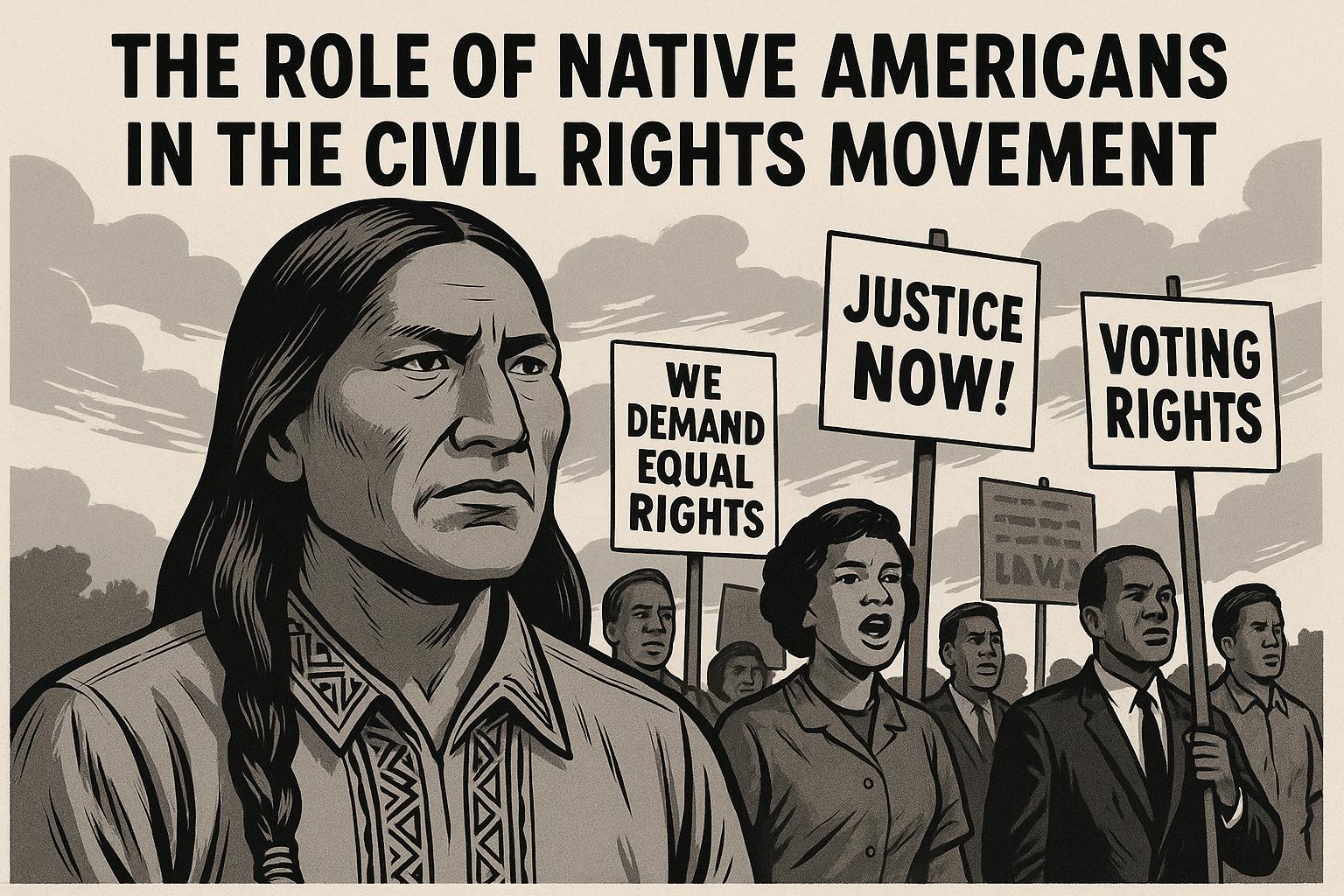
The Role of Native Americans in the Civil Rights Movement
The Civil Rights Movement in the United States is a significant historical era primarily remembered for African Americans’ struggle for equality and justice. However, the contributions of Native Americans were equally important and impactful in this period, though these are often sidelined in popular historical discourse. Their involvement was crucial in shaping the movement by addressing unique challenges and advocating for their communities’ specific rights and issues.
Historical Context
The roots of Native American civil rights activities are embedded deep in the history of oppression and forced assimilation experienced by indigenous communities over centuries. From the late 19th to early 20th centuries, Native Americans began systematically organizing to combat the consequences of colonialism and policies that sought to erase their cultural identities. With the passage of time, these organizations became more sophisticated and intertwined with the broader civil rights agendas. Some landmark events served as a catalyst for greater cooperation between Native Americans and other groups fighting for civil rights.
The National Indian Youth Council
A significant milestone in Native American activism was the establishment of the National Indian Youth Council (NIYC) in 1961. This was the first organization founded and led by Native Americans with the explicit purpose of advocating for indigenous communities’ rights. The NIYC’s foundation marked a pivotal movement in uniting Native American voices to call for the recognition and respect of their rights. One of the notable protests organized by the NIYC was the 1964 “Fish-in” campaign. This demonstration in the Pacific Northwest was a direct response to the infringement of treaty-guaranteed fishing rights. These “Fish-ins” were instrumental in raising awareness about treaty violations and brought the challenges faced by Native Americans into the national spotlight.
American Indian Movement
The American Indian Movement (AIM), founded in 1968, emerged as a powerful force in advocating for Native American civil rights. AIM was formed in response to systemic challenges, such as poverty and police harassment, but its aims extended further to include demands for the restoration of lands and self-governance for indigenous tribes. The organization’s influence expanded significantly in the 1970s when it successfully brought national attention to Native American issues through high-profile protests. Events like the occupation of Alcatraz Island from 1969 to 1971 and the protest at Wounded Knee in 1973 were landmark efforts led by AIM. These events were supported by symbolic occupations and were instrumental in highlighting the demands for treaty rights and reclamation of sacred lands.
Strategic Alliances
Collaboration formed an essential strategy for Native American activists, who often allied with other civil rights groups to amplify their lobbying efforts. One of the most important alliances was between the NIYC and the Student Nonviolent Coordinating Committee (SNCC). This collaboration exemplified how struggles for racial and social justice interlinked, and helped generate broader national awareness and support.
The Red Power Movement
The Red Power Movement paralleled other prevailing civil rights efforts of the time, focusing specifically on empowering Native Americans. It spotlighted demands for federal government accountability in upholding treaties and recognizing tribal sovereignty. Drawing tactical insights from other civil rights movements, Red Power leaders orchestrated strategic protests, sit-ins, and marches to compel meaningful actions.
Impact and Legacy
The active involvement of Native Americans in the Civil Rights Movement significantly elevated the visibility of their issues, leaving a lasting legacy on policy and awareness. A notable legislative achievement was the Indian Civil Rights Act of 1968, which extended constitutional protections to Native Americans living on tribal lands. This act was a significant step in securing equal rights for Native Americans, influenced by the activism and protests of the era.
Continued Struggle
Despite these achievements during the Civil Rights Movement era, Native Americans continue to encounter numerous challenges. Socio-economic disadvantages, health disparities, and legal battles over land and resource rights persist. However, the groundwork laid during the civil rights era remains highly relevant, providing momentum for contemporary advocates. Today’s activists continue drawing inspiration and lessons from the determinants and resilience demonstrated during the earlier struggles.
Conclusion
The contribution of Native Americans to the Civil Rights Movement exemplifies their enduring resilience and untiring pursuit of justice and equality. Understanding and acknowledging their roles enhance the narrative of civil rights in the United States, bringing to light diverse voices critical to the collective pursuit of social progress. Recognizing these contributions fosters a more comprehensive understanding of the country’s civil rights history, supporting broader appreciation of collaborative efforts necessary to effect substantial change.
For more comprehensive insights into Native Americans’ contributions to the Civil Rights Movement, one might explore scholarly publications and historical analyses available through academic libraries and dedicated historical institutions.