
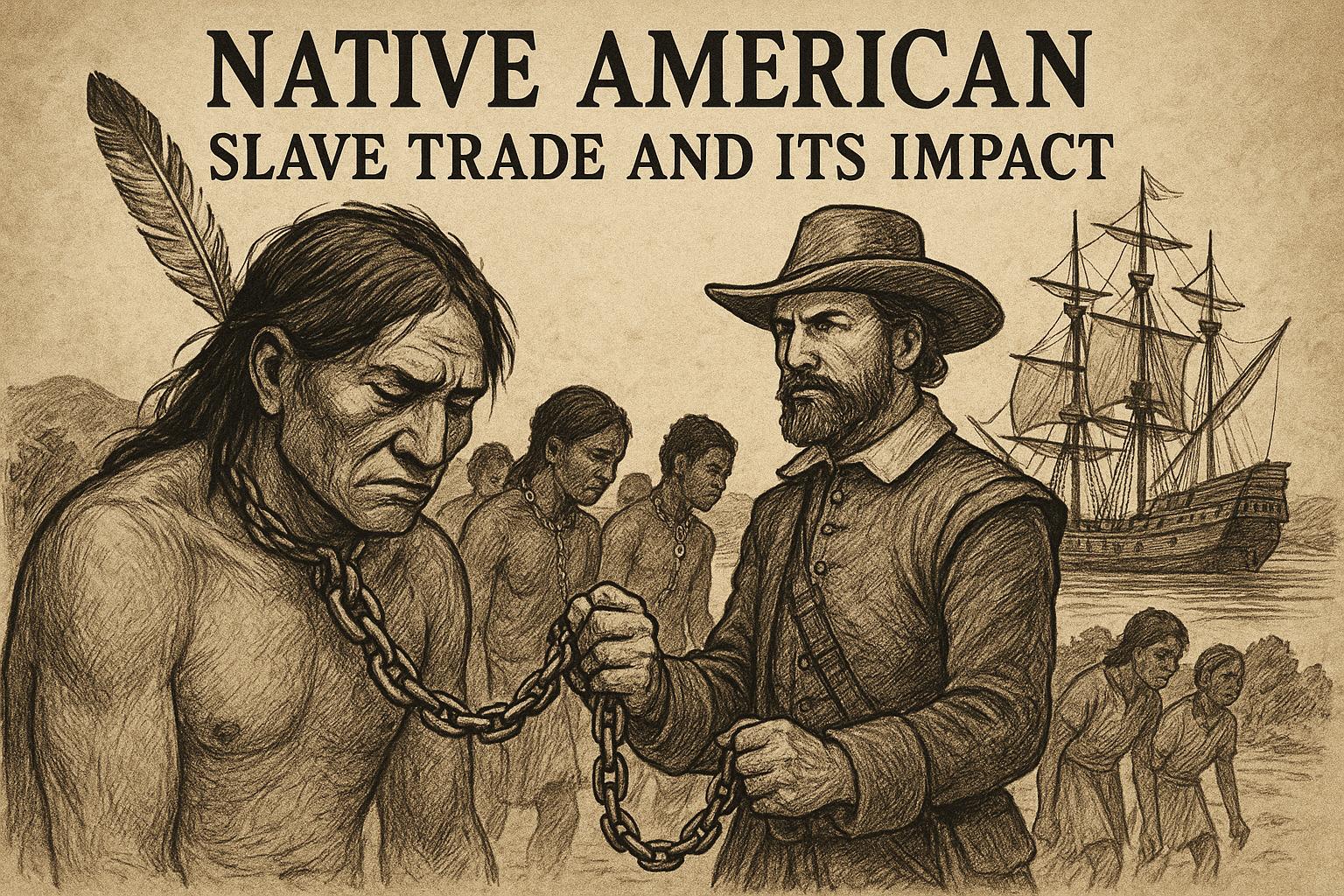
The Historical Context of the Native American Slave Trade
The Native American slave trade was a significant yet often overlooked aspect of early American history. Spanning from the 16th to 18th centuries, this trade involved the capturing, selling, and exploitation of Indigenous peoples by European colonizers and other Native American tribes. This trade played a pivotal role in shaping social, political, and economic structures in both the Americas and Europe.
Origins and Development
The arrival of European colonizers marked the beginning of the Native American slave trade. Initially, Europeans sought to establish economic footholds through trade, but as demand for labor grew, they began to incorporate Native Americans into a burgeoning system of slavery. The Spanish were among the first to engage in this trade, utilizing Indigenous labor in the Caribbean and parts of South America. As the European presence expanded, the need for a reliable labor source became evident, fostering the growth of the Native American slave trade.
Increased Demand for Labor
The labor-intensive demands of European settlements, particularly in agriculture and mining, intensified the need for a labor force. As a result, the enslavement of Native Americans became more systematic. This demand was not only met through direct capture by Europeans but also involved alliances with certain Indigenous groups who would capture members of rival tribes and sell them into slavery. The system was perpetuated by the economic incentive it provided to both European colonizers and participating Native tribes, reinforcing the practice of enslavement as settlements grew and economic activities diversified.
The Role of Native American Tribes
The involvement of some Native American tribes in the slave trade should not be overlooked. Many tribes participated actively, capturing and trading slaves with Europeans, often as a strategic move to gain advantages, acquire goods, or settle scores with rival groups. This complex network of relationships highlights the fluid dynamics between survival, collaboration, and coercion during this period. Tribes operated within an intricate web of alliances and rivalries, balancing their traditional practices with new economic opportunities presented by the European presence.
Impact on Native American Communities
The effects of the slave trade on Native American communities were profound and multifaceted. The constant threat and reality of enslavement disrupted traditional life-ways, leading to the depopulation of certain areas due to raids and forced migrations. Social structures were strained as families and communities were torn apart. This fracturing had lasting implications on cultural cohesion and continuity, altering not only individual lives but community identities as well.
Cultural and Demographic Changes
Over time, the slave trade contributed to significant cultural and demographic changes. The loss of population weakened tribal structures, leading to shifts in power dynamics within and among tribes. In some cases, the continual disruptions led to the assimilation of certain groups into other tribes, while in others, the introduction of European goods and practices altered traditional ways of life. The incorporation of European technology and items had a dual effect: it facilitated some aspects of daily living while simultaneously disrupting established cultural practices.
Long-term Effects and Legacy
The legacy of the Native American slave trade continues to affect descendants of these communities today. It laid a foundation for the broader system of racialized slavery that would later dominate the American South. Recognizing and understanding this history is essential for acknowledging the resilience of Native American cultures and the complex interactions that have shaped current societies. The enduring impact of this era is visible not only in demographic changes but also in the legal and social structures that evolved during and after this period of history. Understanding this legacy enables a broader comprehension of the socio-economic and political developments that facilitated the growth of racialized systems of oppression.
Examining the Native American slave trade reveals the complexity and interconnectedness of power dynamics and economic interests in early American history. Its influence extended beyond immediate economic gains, setting precedents for future interactions between Native American tribes and European settlers. The historical context of this trade challenges the narrative of colonial America as merely a place of refuge and opportunity, presenting instead a landscape marked by exploitation and resistance.
The Native American slave trade is a reminder of the intricate web of relationships forged through necessity and conflict, offering insights into the resilience and adaptability of Indigenous populations in the face of profound challenges. Unraveling this aspect of history not only enriches our understanding of the past but also illuminates the pathways by which contemporary societies have been shaped. Recognizing and remembering these nuances is crucial to fostering greater appreciation and respect for the diverse narratives that comprise the American experience.