
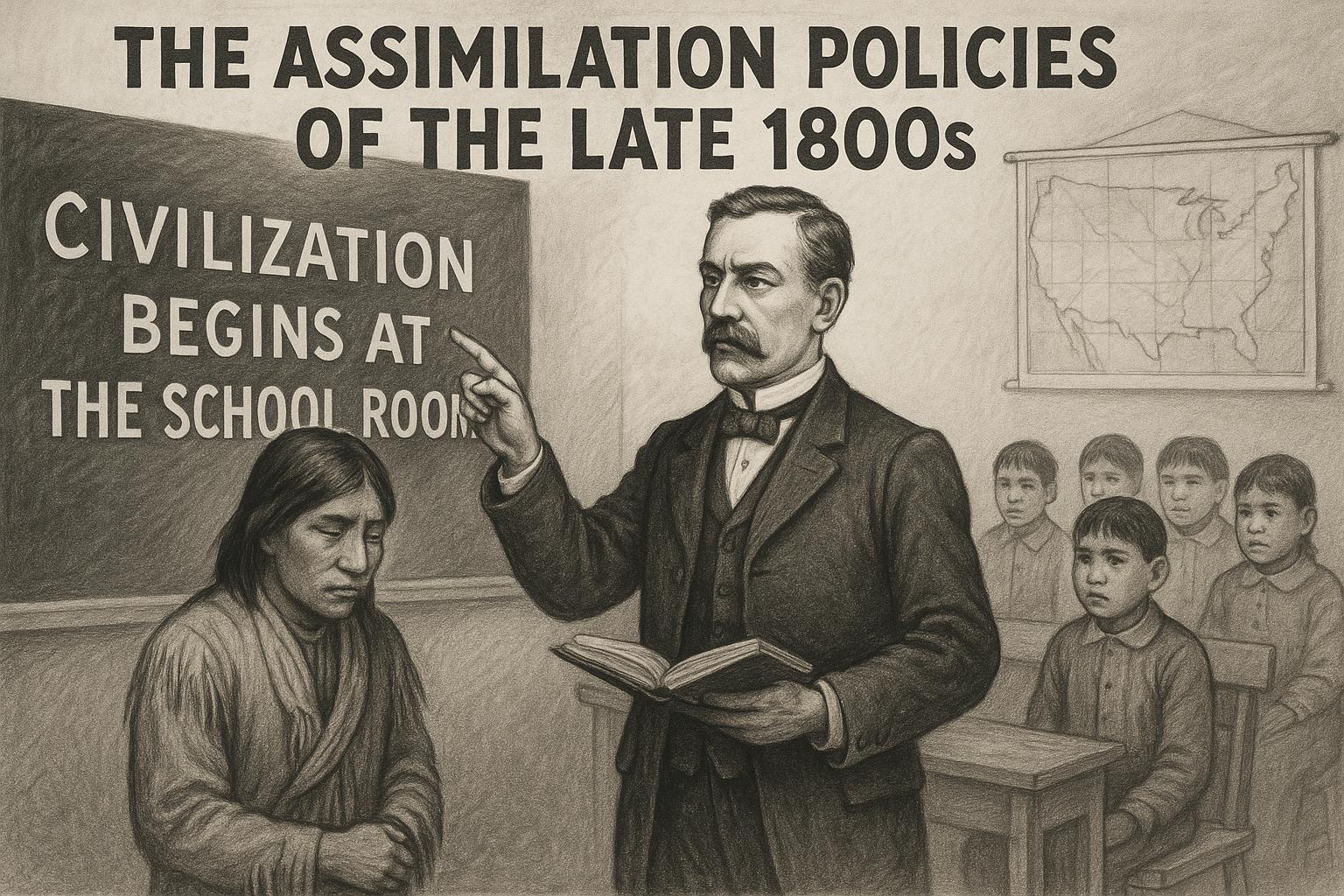
The Assimilation Policies of the Late 1800s
The late 19th century was a period characterized by aggressive assimilation policies, particularly aimed at indigenous populations and immigrants in the United States and Canada. This era marked a concerted effort to integrate these groups into the dominant Euro-American culture, often at the expense of their native traditions and identities.
Government Policies and Motivations
The driving force behind these policies was the belief in the cultural superiority of Western civilization, a concept often referred to as “Manifest Destiny” in the United States. This ideology dictated that it was both a right and an obligation to spread Western values and systems. The core idea was that bringing these ideas to others would somehow improve their lives and help civilize them according to the standards of the time.
In the United States, the most notable assimilation policy was the Dawes Act of 1887. This Act aimed to transform indigenous peoples into American farmers by allocating them individual plots of land and encouraging the adoption of Western agricultural practices. The Act divided previously communal tribal lands into individual allotments, ostensibly to promote independence and citizenship. This division was also part of a larger strategy to dissolve tribal affiliations, thus reshaping the social structures that sustained indigenous cultures.
Impact on Indigenous Populations
However, the reality of the Dawes Act and similar policies often resulted in detrimental effects on indigenous communities. Loss of land was a significant consequence, as surplus lands were sold to non-indigenous settlers. The redistribution effectively reduced the land holdings of indigenous peoples and often left them with land that was inadequately suited for profitable agriculture.
Additionally, the imposition of an individualistic farming model clashed with the communal cultures of many Native American tribes, leading to social disruptions and loss of cultural identity. The shift from cooperative tribal systems to individual land ownership was not just an agricultural change but a fundamental alteration in lifestyle. The community-centric nature of tribal societies was undermined, which in turn eroded community bonds and traditional ways of life.
Educational Reforms
Education played a critical role in the assimilation process. Institutions such as the Carlisle Indian Industrial School in Pennsylvania were established to educate Native American children in the English language and Western customs. These schools were designed to instill Euro-American values and dislodge indigenous traditions from these young minds.
The motto “Kill the Indian, save the man” underscored the intention to erase indigenous cultures within these educational systems. This approach often involved separating children from their families and communities, leading to a disconnection from their heritage. Children were forced to abandon their native languages, traditional clothing, and even their names in exchange for those that aligned with Euro-American norms.
The experience at these schools was often traumatic; children were not only punished for practicing their culture but also faced neglect and abuse. The legacy of these educational policies is still felt today, influencing the socio-economic and cultural realities of indigenous communities.
Immigrant Assimilation
Assimilation policies also targeted the influx of immigrants arriving in North America. These newcomers came from diverse backgrounds, including Europe, Asia, and beyond, bringing with them a variety of languages, religions, and customs. The aim was to mold these diverse populations into an American or Canadian identity. This often meant learning English, adopting Western dress codes, and embracing national customs and holidays.
While these processes were less forceful than those targeting indigenous populations, they still applied significant pressure to conform. Laws and regulations were instituted to promote the use of English over other languages, and societal expectations often leaned heavily toward conformity to dominant norms, effectively sidelining cultural expressions that stood out as different.
Challenges and Resistance
Resistance to these assimilation efforts varied among groups. Some indigenous communities managed to maintain aspects of their culture through clandestine practices, while others engaged in active resistance through legal and political avenues. Tribal leaders sometimes negotiated to retain certain cultural practices, though often with varying degrees of success.
Similarly, immigrant communities often formed enclaves where they could preserve cultural practices amidst pressures to assimilate. Neighborhoods such as New York City’s Little Italy or San Francisco’s Chinatown became spaces where immigrant communities could practice their traditions more openly. These areas provided a buffer against the full force of assimilation policies and allowed cultural traditions to continue and adapt over time.
Legacy and Reevaluation
Today, the legacy of these assimilation policies is viewed critically. There is a growing recognition of the negative impacts they had on both indigenous and immigrant communities, including cultural erasure and socio-economic disadvantages. Historical reassessment continues to shed light on the consequences of these policies, providing a fuller picture of their impact on affected communities.
Efforts are being made to acknowledge past injustices and promote policies that respect and celebrate cultural diversity. Numerous organizations and governments have begun initiatives aimed at reconciliation and restoring cultural heritage to those who were subjected to these policies. Cultural revitalization projects, educational reforms, and legal recognitions are some measures being taken to address past grievances.
For further reading and in-depth analysis on this topic, you might consider exploring resources from historical societies or educational institutions focused on indigenous studies and cultural history. These resources offer valuable insights into the complexity of assimilation policies and the resilience of the communities they affected.