
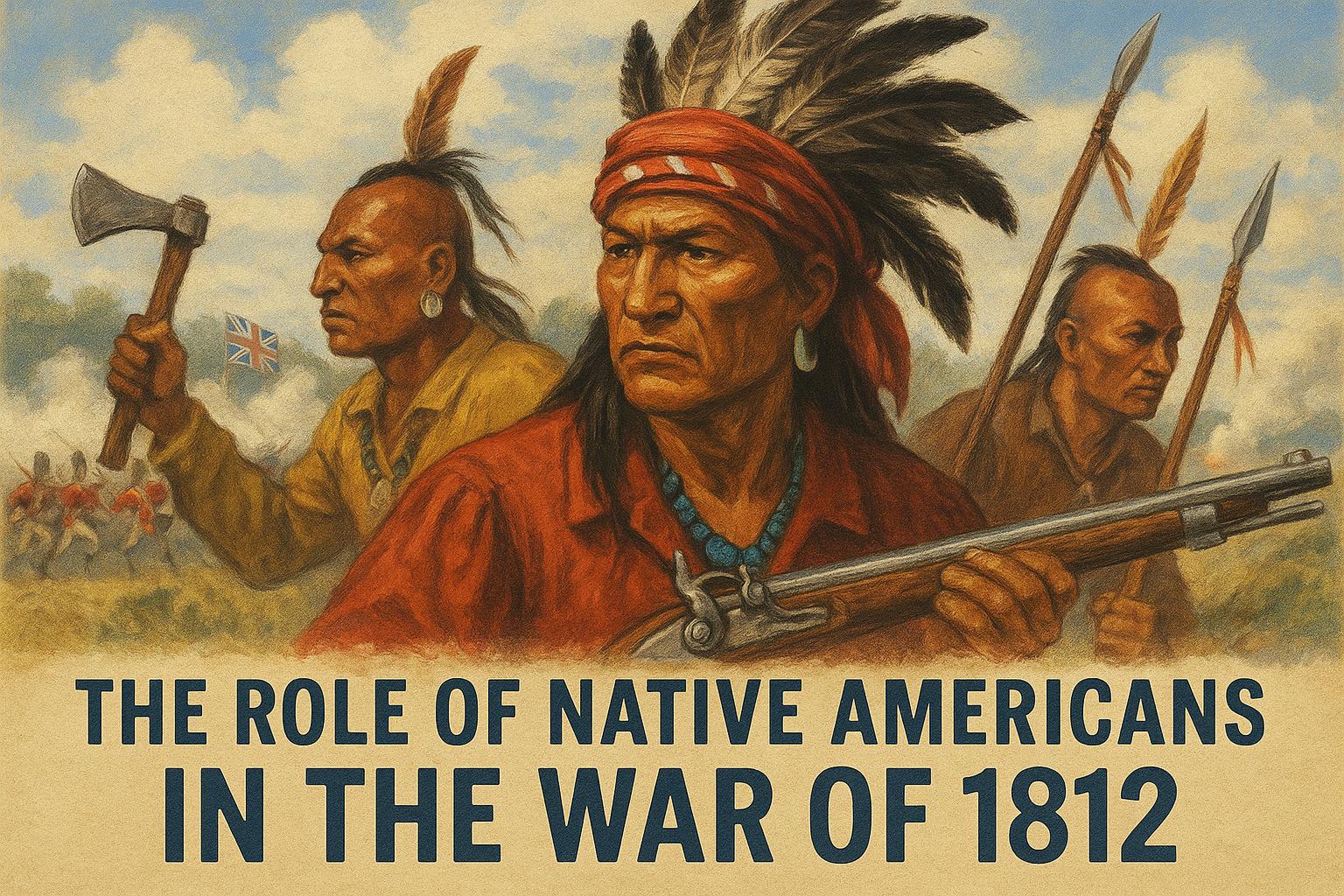
The Involvement of Native Americans in the War of 1812
The War of 1812 was a multifaceted conflict that carried significant implications not only for the primary combatants, the United States and the British Empire, but also for the indigenous populations of North America. The engagement of Native American tribes was a critical element during this period, as they were not merely bystanders but active participants who shaped the course of the war in various ways. Their involvement was rooted in a combination of strategic alliances, territorial defense, and a broader struggle for autonomy against encroaching settlers.
Alliances and Support
The conflict presented Native American tribes with a complex set of choices, particularly concerning alliances. Most notably, numerous tribes opted to ally with the British, perceiving them as a lesser threat compared to the aggressive territorial ambitions of American settlers. This alliance was based on mutual interests; the British sought to counteract American influence in the region, while Native Americans aimed to leverage British power to secure their lands and sovereignty.
This relationship was underscored by notable leaders such as Tecumseh, the charismatic Shawnee chief, who played a pivotal role in advocating for Native American interests. Tecumseh’s efforts were instrumental in forming a broad coalition of tribes to stand against U.S. expansion.
Tecumseh’s Confederation
Tecumseh’s vision of creating a vast Native American confederation was ambitious. He traversed vast distances to bring together tribes with divergent interests, uniting them under a common objective: to resist the encroachment of settlers. His ability to communicate a compelling vision of unity was crucial in rallying support.
The confederation sought to establish a formidable front capable of defending their territories against American incursions. Tecumseh’s leadership, along with his brother Tenskwatawa or The Prophet, was manifest in several military engagements such as the Battle of Tippecanoe and later, the Battle of the Thames, where Tecumseh was killed. His death marked a significant turning point, diminishing the confederation’s influence and its capacity to challenge American forces effectively.
Significant Battles and Campaigns
Throughout the War of 1812, Native American warriors were integral to various battles, utilizing their extensive knowledge of local terrains and unconventional fighting tactics to aid the British. Their contributions were particularly influential in engagements such as the Battle of Queenston Heights, where they played a key role in the British victory, and their involvement in the Chesapeake Campaign further demonstrated their strategic importance.
Notably, some Native American groups aided American efforts, often driven by different motivations. Tribes in the southern regions, including the Cherokees, Creeks, and Choctaws, were involved in the Creek War, aligning with American forces under the promise of securing their territories against external threats. This alignment, however, resulted in mixed outcomes, as internal conflict and external manipulation often undermined these efforts.
The Legacy of Native American Involvement
The conclusion of the War of 1812 held profound implications for Native American tribes, often resulting in outcomes contrary to their aspirations. Despite their contributions, the post-war period signaled an era of accelerated American expansionism. This entailed a series of aggressive policies aimed at the acquisition of Native lands, leading to further displacement and unfavorable treaties.
The British, defeated and preoccupied with their own recovery, withdrew much of their support for Native American allies. Meanwhile, the United States interpreted its perceived victory as justification for a concerted push westward, guided by the ideology of Manifest Destiny. This resulted in significant encroachments onto Native American territories, drastically altering their traditional ways of life and diminishing their autonomy.
While the participation of Native Americans in the War of 1812 has often been understated in mainstream historical accounts, their involvement had lasting impacts on the war’s dynamics and its broader geopolitical consequences. Their attempts to safeguard their homelands amid larger geopolitical upheavals underscore the complexities of their positions during this tumultuous era.
In conclusion, the involvement of Native American tribes in the War of 1812 was marked by strategic decisions, alliances, and military engagements that significantly influenced the trajectory of the conflict. Their legacy, however, is characterized by the struggle for survival and autonomy in the face of overwhelming external pressures. For those interested in exploring this subject further, academic publications and historical records provide a wealth of information detailing the diverse strategies and motivations of Native American tribes during this critical period in history.