
Introduction
The Lewis and Clark Expedition, also known as the Corps of Discovery, was a pivotal journey in early American history that took place between 1804 and 1806. Commissioned by President Thomas Jefferson, the aim was to explore the newly acquired western portion of the United States after the Louisiana Purchase. The contributions of Native American tribes to this expedition were not only invaluable but also played a decisive role in the mission’s ultimate success.
The Role of Native American Tribes
Throughout the expedition, the relationship between the Corps of Discovery and various Native American tribes was multifaceted, involving trade, negotiation, guidance, and at times, tension.
Trade and Diplomacy: The Corps relied on trade with Native American tribes to secure provisions and acquire necessary goods. Tribes such as the Mandan and Hidatsa provided shelter and food during the harsh winters. In turn, Lewis and Clark offered gifts and military uniforms to demonstrate goodwill. The trade interaction was pivotal for the expedition’s survival and continued progress, illustrating the deep interdependence between these explorers and the native populations they encountered.
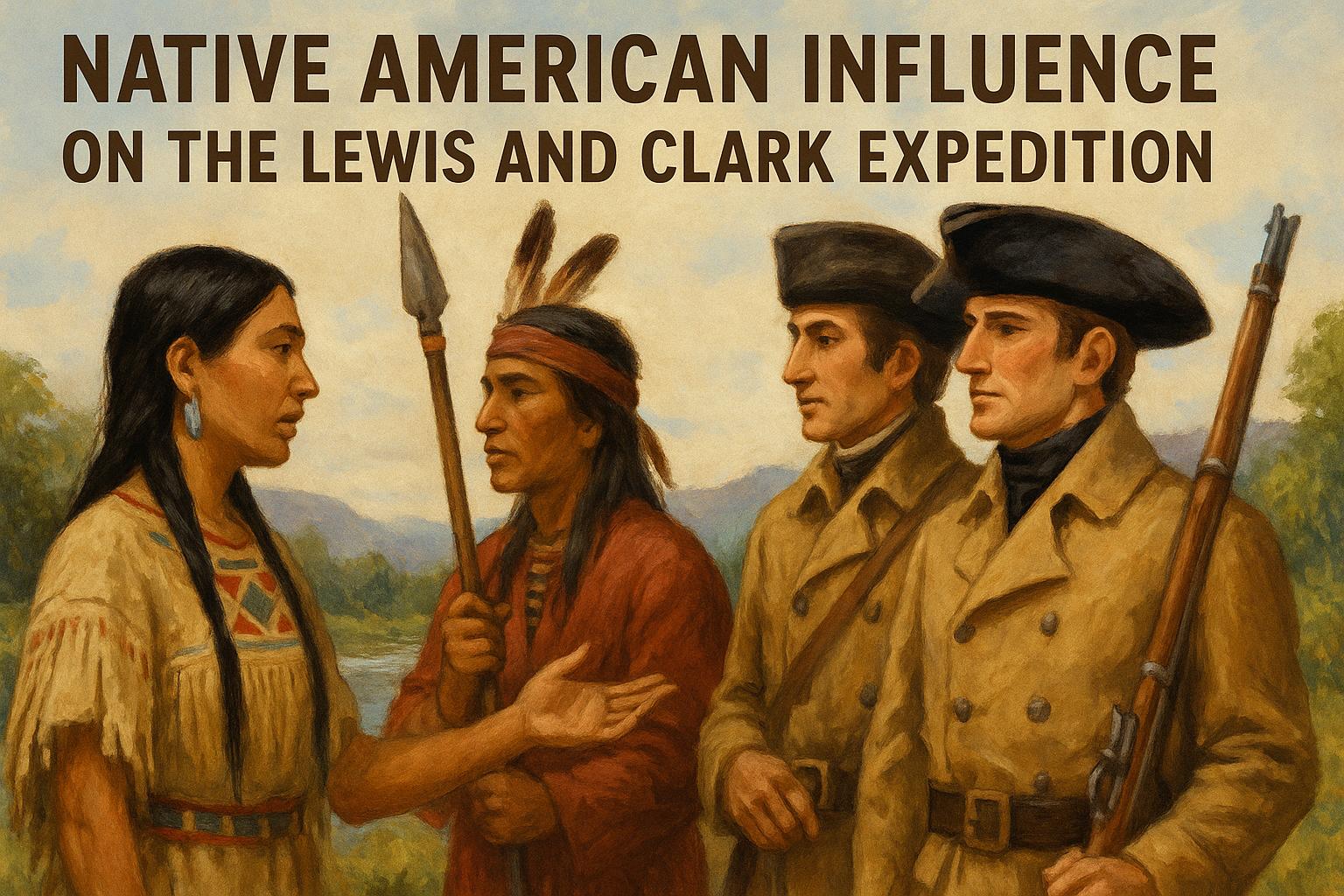
Guidance and Navigation: Without the assistance and knowledge of Native American guides, navigating the vast and treacherous landscapes would have been significantly more challenging. The Shoshone woman Sacagawea, perhaps the most renowned figure associated with the expedition, accompanied the Corps, offering her linguistic skills and geographical knowledge. Her assistance was particularly crucial when the expedition faced difficult terrains and required local knowledge to proceed safely.
Sacagawea’s Contributions
Sacagawea, born to the Lemhi Shoshone, played a crucial role during the expedition. Her ability to communicate with Shoshone tribes was instrumental in securing horses and safe passage through the Rocky Mountains. Additionally, her presence with the Corps helped convey peaceful intentions to other Native American groups, as the inclusion of a woman and child in a traveling party was unusual for armed forces at that time. The symbolic nature of Sacagawea’s presence can be considered an early example of employing soft power and diplomacy in interactions between vastly different cultures.
Critical Support and Cultural Exchange
Winter Encampments: During their winter encampment with the Mandan and Hidatsa tribes, the expedition successfully avoided the severe winter conditions that might have otherwise proved disastrous. This period was an opportunity to learn from the Mandan about the terrain and path ahead. The knowledge and skills passed on by these tribes were invaluable, offering insight into surviving and navigating the challenging environments encountered during the journey.
Cultural Exchange: The interaction between the Corps and the tribes facilitated a cultural exchange, where both sides shared knowledge about the land, local customs, and traditions. This exchange also had a lasting impact on diplomatic relations. Initiated through necessary interaction, these exchanges grew into deeper understanding, though not entirely void of misunderstandings, paving the way for more nuanced cross-cultural understanding.
Challenges and Conflicts
Tensions and Misunderstandings: Despite many positive interactions, there were instances of tension and conflict. Misunderstandings due to language barriers and cultural differences occasionally strained relations. The encounter with the Teton Sioux tribe reflected such challenges, where tense negotiations almost led to confrontation. These moments taught the explorers about the importance of patience and communication in cross-cultural exchanges, highlighting the complexities and potential pitfalls in such engagements.
Impact on Future Expeditions
The expedition had far-reaching impacts beyond the immediate objectives of mapping the newly acquired land. It established a precedent for future exploration missions in terms of engaging with local populations. The knowledge gained from Native American tribes not only facilitated Lewis and Clark’s journey but also provided a source of learning for subsequent expeditions. An understanding of geopolitics, more effective negotiation techniques, and the ability to adapt to diverse environments were derived directly from interacting with these tribes.
Documentation of Flora and Fauna
In addition to their interactions with Native American tribes, Lewis and Clark meticulously documented various species of plants and animals they encountered, many of which were previously unknown to European-Americans. The input from Native American tribes in identifying and contextualizing these species was instrumental. Their knowledge of the land and its ecosystems and their practical uses enriched the scientific aspect of the expedition’s findings.
Legacy and Broader Implications
The Lewis and Clark Expedition, while fundamentally a mission of exploration and expansion for the United States, was heavily reliant on Native American knowledge, resources, and guidance. The interactions during this expedition provided insights into Native American cultures and established a foundation for future relations, albeit complex and often fraught. The contributions of Native American tribes underscore the interconnected history of Native peoples and early American explorers, an essential aspect of understanding the broader narrative of American westward expansion.
The expedition’s legacy illustrates the impact of diplomacy, trade, and collaborative engagement across cultural boundaries. While the venture is often seen through the lens of American expansionism, it is critical to acknowledge the shared human experiences and knowledge exchanges that significantly shaped its course.
For further reading on the topic, consider exploring resources like the Lewis and Clark Trail Heritage Foundation, which provide comprehensive insights into the expedition and its historical significance.