
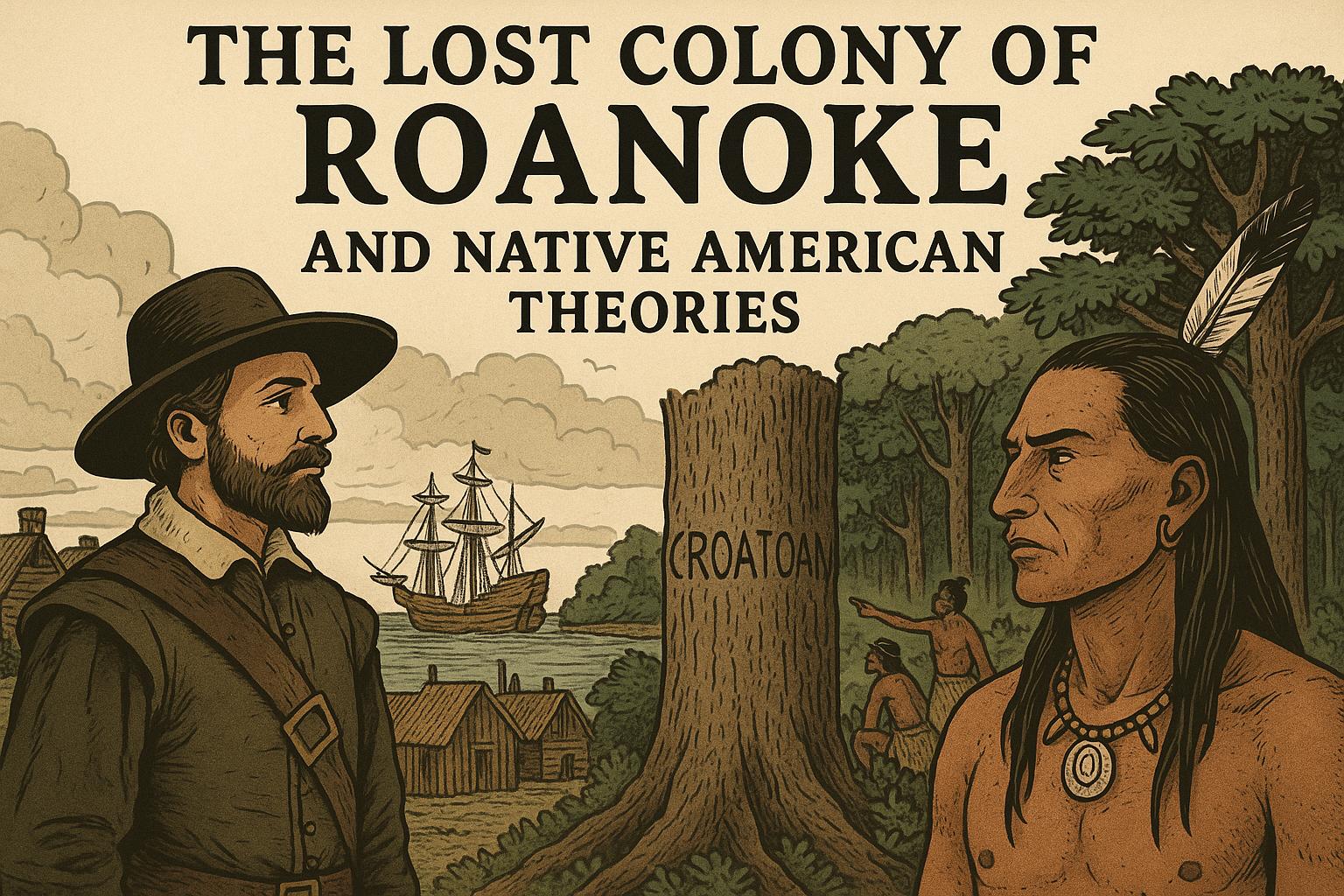
The Mystery of the Lost Colony of Roanoke
The enigma surrounding the Lost Colony of Roanoke stands as one of the most compelling and unsolved puzzles in American history. This English settlement, founded on Roanoke Island—part of today’s North Carolina—was intended to be the first permanent English colony in the New World. Established in 1587, the colony was led by Governor John White and included a total of 115 men, women, and children. They set out with hopes of establishing a foothold in this vast and unknown land. However, upon White’s return in 1590 from a resupply trip to England, he was shocked to find the settlement deserted without any clear signs of the colonists’ fate.
Archaeological Evidence and Historical Accounts
Despite numerous investigations, the ultimate fate of the Roanoke colonists remains shrouded in mystery. Archaeologists have yet to uncover decisive evidence that explains what truly transpired. A notable clue left behind was the word “CROATOAN,” which had been carved into a post of the fort. Additionally, the letters “CRO” were found etched into a nearby tree. These cryptic inscriptions have spawned various hypotheses about the settlers’ fate, inviting further study and speculation.
Native American Theories
The interaction between the Roanoke settlers and Native American tribes is central to many theories seeking to explain the disappearances. These theories frequently explore the possibilities of assimilation, relocation, or conflict between the settlers and local tribes.
The Croatan Theory
One of the most discussed theories posits that the settlers joined forces with the Croatan, a tribe residing on nearby Hatteras Island. Known to the early colonists, the Croatan people were part of a landscape familiar to settlers, and the carvings left at the site point some historians to hypothesize that the colonists may have sought refuge with this tribe. Historical accounts from subsequent English explorers and colonists describe Native American tribes featuring individuals with European characteristics. Such observations lend credence to the notion that intermarriage or integration occurred. These tribes sometimes even claimed descent from white settlers, supporting the hypothesis.
Coastal Migration Theory
A second theory, known as the Coastal Migration Theory, suggests that the colonists may have embarked on their own journey, seeking safer and more hospitable environments amid growing unease and tight resources. Accounts in Native American oral histories recount encounters or indirect knowledge of Europeans along the coastal mainland, in line with the idea that the Roanoke colonists ventured from their original location. Unfortunately, this theory too is hindered by an absence of concrete physical evidence.
Conflict and Captivity Theory
Another compelling but speculative theory revolves around the prospect of conflict and captivity. Given the sometimes-strained relations between settlers and indigenous populations, it is conceivable that the colonists met with hostility. Some suggest that settlers may have been killed or captured by tribes in the vicinity. However, the lack of evidence suggesting violence within the archaeological footprint of the settlement leaves this idea as conjecture.
Alternative Theories and Ongoing Research
Beyond the more widely examined Native American theories, other possibilities continue to intrigue researchers and historians. Advancements in technology and methodology in recent times have led to renewed interest in old records and re-examination of previously surveyed sites. Meanwhile, genealogical investigations strive to find genetic markers or lineages that support any theories involving integration with native tribes.
For instance, analysis of water currents and weather conditions has led some scientists to propose that the colony’s location was subject to frequent environmental stress, such as hurricanes, which may have prompted relocation. Similarly, given the absence of bodies or typical signs of any immediate struggle, other researchers speculate about the possibility of the settlers constructing makeshift rafts intending to travel southward or toward other colonial settlements they might have believed existed.
Furthermore, theories involving international intrigue suggest that elements from rival nations such as the Spanish—who were known to patrol coastal areas—could have influenced or sabotaged the colony. Such complex interactions, however, require more substantial evidence before they can be taken seriously.
Conclusion
The saga of the Lost Colony of Roanoke continues to enthrall professional historians and amateur detectives alike, with each discovery bringing new questions instead of conclusive answers. While the precise fate of the colonists remains a mystery, theories concerning Native Americans and other speculative scenarios provide valuable insights into what might have happened based on the historical context and sparse evidence. Scientists and historians hold out hope that new archaeological finds will one day unlock the secrets of Roanoke Island. Moreover, academic resources and ongoing studies, such as those conducted by universities and archaeological institutions actively involved in the process, are vital to piecing together this unresolved part of America’s past. Until then, the Lost Colony of Roanoke stands as a fascinating chapter in the larger narrative of exploration and colonization.