
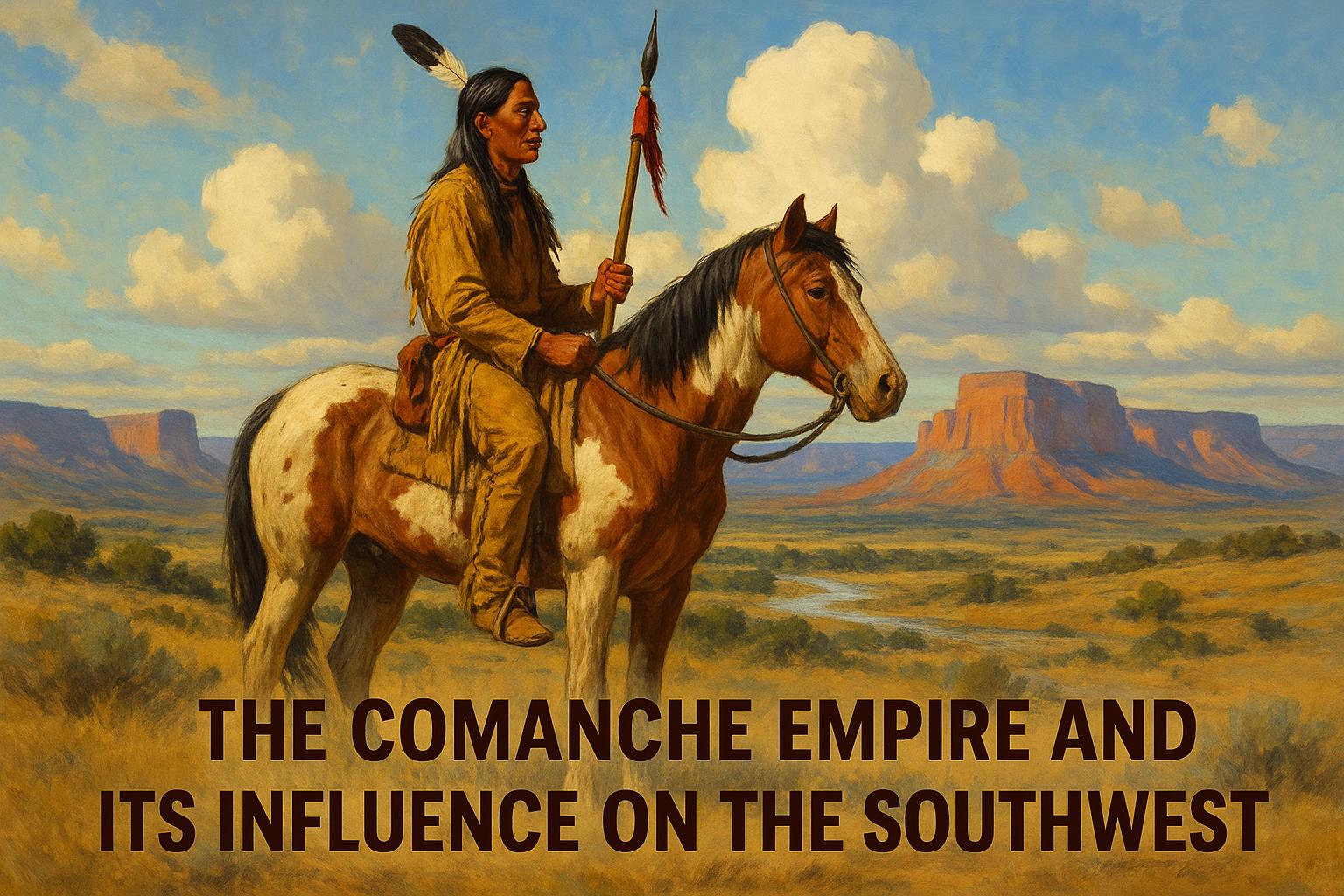
The Rise of the Comanche Empire
The Comanche Empire emerged as a dominant force in the American Southwest during the 18th and 19th centuries. The Comanches, originally from the Wyoming area, migrated southward in the 17th century. They were part of the Shoshone language family and soon distinguished themselves through their exceptional horsemanship and tactical prowess. Their introduction to horses, acquired from the Spanish, was pivotal in transforming their society and their influence over the region. This transformation allowed them to command respect and exert power over vast expanses of land, shaping the political and cultural landscape of the time.
Comanche Society and Culture
Comanche society was a dynamic and adaptable entity. The introduction of the horse granted them unprecedented mobility and the capacity for resource acquisition, military conquest, and trade. Their structure was loosely organized around familial and kinship lines, allowing for flexibility and quick decision-making. This fluid social structure enabled the Comanches to control vast territories, which included parts of present-day Texas, Oklahoma, New Mexico, Colorado, and Kansas. These vast areas were not only lands of survival but also of influence, establishing the Comanches as a dominant force in North American history.
The horse culture not only transformed their society but also allowed them to become adept traders. The Comanches engaged in extensive trade networks, dealing in goods such as horses, captives, and buffalo meat. This commerce extended as far south as Mexico, east to the Mississippi River, and north to the Canadian border. These trade routes facilitated cultural exchanges, allowing the Comanches to not only trade goods but also share and integrate ideas and skills with diverse cultures. Their trade prowess helped establish a network that solidified their economic power and extended their influence beyond mere territorial boundaries. Through their trading operations, they were able to procure essential goods like guns, ammunition, and other European items, further enhancing their military capabilities and lifestyle.
Military Strategy and Expansion
The Comanche’s strategic military tactics played a crucial role in their expansion. They were known for their swift raids and ambushes, often striking quickly and retreating before counter-attacks could be organized. Their mastery of horseback warfare provided them with significant advantages over their adversaries, including early Spanish settlers, Mexican forces, and neighboring Native American tribes. This military prowess was not born out of sheer might, but rather through keen strategic planning, understanding of the geography, and an ability to quickly adapt to rapidly changing scenarios.
The Comanche warriors were trained from a young age in horsemanship and combat, making them exceptionally skilled fighters. This focus on military prowess helped bolster their expansion efforts without overly taxing their resources. Moreover, their raids were not random acts of violence but rather calculated efforts intended to disrupt their opponents’ plans and acquire resources efficiently.
By the 18th century, the Comanches had established themselves as a formidable power, often referred to as the ‘Lords of the Southern Plains.’ This dominance was partly due to their ability to form strategic alliances with other tribes, such as the Kiowa, which strengthened their military capabilities. These alliances not only enhanced military strength but also helped stabilize the region under a somewhat unified front, allowing for coordinated trade and resource management.
Impact on the Spanish and Later Mexican Territories
The influence of the Comanche Empire on the Spanish and later Mexican territories was profound. The Spanish mission system in Texas frequently found itself under pressure from Comanche raids, which impeded Spanish territorial ambitions. The horses and captives taken by the Comanches during these incursions disrupted the Spanish colonial economy, complicating their efforts to extend colonial reach and consolidate power.
Following Mexican independence in 1821, the Comanche presence continued to challenge the nascent Mexican state. Their raids influenced Mexico’s political landscape and complicated Mexico’s efforts to populate and defend its northern territories. These raids exacerbated tensions within the region, weakening centralized control and causing socio-political disturbances that affected Mexican governance. The Mexicans were forced to negotiate treaties and agreements in hopes of quelling Comanche aggression, often finding themselves on unstable ground. The presence of the Comanche Empire created a buffer that deterred deeper Mexican penetration into Texas, indirectly aiding future Texan independence movements.
The Decline and Legacy of the Comanche Empire
In the latter half of the 19th century, the Comanche Empire began to decline due to a combination of factors. These included increased military campaigns by the United States, diseases introduced by European contact, and the depletion of the buffalo, a primary resource. The U.S. military campaigns, coupled with the decrease in buffalo populations—central to Comanche sustenance and trade—profoundly affected their economy and lifestyle.
The Treaty of Medicine Lodge in 1867 marked a significant turning point, as it sought to confine the Comanches and other tribes to reservations. This imposition of borders and restrictions on movement starkly contrasted with the nomadic lifestyle and territorial fluidity the Comanches had successfully maintained for centuries. Moreover, the introduction of railways and new settlers further encroached upon their lands, reducing the spaces they could roam freely.
The legacy of the Comanche Empire is still evident today. Their influence on the cultures and histories of the Southwest cannot be overstated. Their interactions stirred significant cultural exchanges and left an indelible mark on the socio-political landscape of the region. The equestrian skills they mastered and the trade networks they established are still points of study and admiration. Additionally, the Comanche’s adept adaptation to rapidly changing circumstances reflects a robust cultural resilience.
For more on this topic, consider exploring resources on Native American history from reputable academic institutions and organizations. You might be interested in the resources offered by the Native History Association for further reading. These resources provide a more comprehensive historical perspective and delve into the nuanced interactions and impacts of the Comanche Empire on various fronts. By understanding the rise and decline of the Comanche Empire, one gains insight into the broader narratives of resistance, adaptation, and legacy that shape Native American history.