
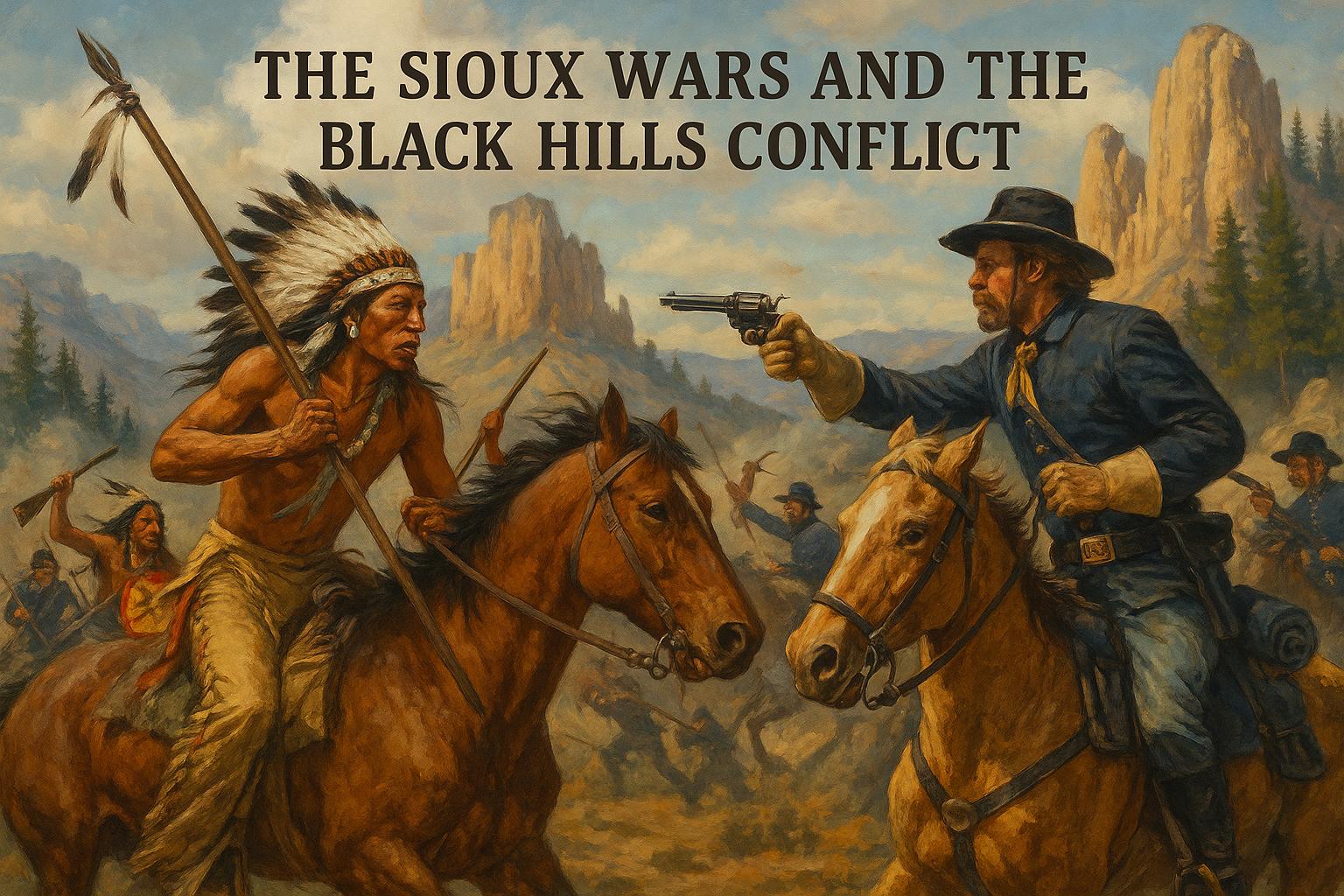
The Sioux Wars and the Black Hills Conflict
The Sioux Wars encompass a series of confrontations between the United States and various factions of the Sioux people, a collective name for the Lakota, Dakota, and Nakota tribes. These series of engagements are etched into the annals of the late 19th century, marking an era characterized by profound upheavals in the history and culture of Native American tribes and the nascent United States.
Background of the Sioux Wars
The roots of the Sioux Wars delve into the expansive ambitions of the United States government, which drove its policies and fueled the relentless push of settlers into tribal territories. With the discovery of gold and other valuable natural resources, tensions between Native Americans and European-Americans only escalated. The allure of newfound wealth beckoned adventurers, settlers, and opportunistic miners, accelerating their invasion into traditional Native American domains. This surge of newcomers exerted mounting pressure on the U.S. government to annex lands that indigenous peoples historically inhabited, disregarding treaties and solemn promises in favor of expansionist interests.
During the mid to late 1800s, these confrontations were not only struggles over physical territories but were emblematic of deeper cultural clashes. The U.S.’s Manifest Destiny—its perceived right to expand across the continent—clashed inexorably with the indigenous people’s struggle to maintain their sovereignty, cultural identity, and way of life. The stakes were existential, as the outcomes would determine not just territorial control but also the future dynamics of cultural integration and survival.
The Black Hills Conflict
A pivotal chapter in the series of Sioux Wars was the Black Hills Conflict, which concentrated around the Black Hills region, an area now within the confines of South Dakota and Wyoming. For the Sioux people, these lands were not simply geographical features; they held profound spiritual significance. Initially, the Treaty of Fort Laramie in 1868 had acknowledged and protected Sioux rights over the Black Hills, but subsequent developments, particularly the gold rush of 1874, dramatically altered the situation.
Encroachment by miners, emboldened by the promise of untold riches, breached the terms of the treaty, notwithstanding its emphasis on the inviolability of Sioux territorial claims over the Black Hills. This infringement ignited fierce resistance among the Sioux and other Native Americans, precipitating a significant escalation in hostilities.
The Treaty of Fort Laramie
The Treaty of Fort Laramie, signed in 1868, was designed to prevent further conflicts and foster peace between the U.S. government and the Sioux Nation. As part of its provisions, the treaty carved out the Great Sioux Reservation, which encompassed the Black Hills, conferring exclusive hunting and residing rights to the Sioux. The agreement obligated the U.S. government to curtail settlement activities on these lands. However, upholding the treaty’s stipulations became increasingly fraught as the territorial lust of inbound settlers overpowered the policies and pledges of federal authorities.
The Battle of Little Bighorn
The Black Hills Conflict attained critical mass during the Battle of Little Bighorn in 1876, popularly immortalized as Custer’s Last Stand. Under the command of Lieutenant Colonel George A. Custer, the 7th Cavalry Regiment encountered a formidable alliance of Sioux and Cheyenne warriors. The indigenous leaders, including the esteemed Sitting Bull and Crazy Horse, orchestrated a masterful defense and inflicted a staggering defeat upon the U.S. forces. Although this victory was significant, it paradoxically prompted the U.S. government to redouble efforts to subjugate the Sioux and acquire control over their lands through a series of military campaigns and legislative maneuvers.
Aftermath and Legacy
The conclusion of the Sioux Wars did not herald an era of peace for the Sioux people; instead, it merely ushered in a new chapter of systematic efforts to integrate and assimilate them into the mainstream of American society. The policies enacted by the U.S. government targeted the foundational aspects of Sioux culture, striving to dismantle their traditional lifestyle and erode their autonomy. Ultimately, the Black Hills were expropriated by the United States—a decision challenged on legal platforms for numerous decades.
In a landmark legal outcome in 1980, the U.S. Supreme Court pronounced in United States v. Sioux Nation of Indians that the government’s appropriation of the Black Hills was unlawful, offering financial compensation as restitution. Yet, steadfast in their convictions, the Sioux refused the monetary compensation, persisting instead in their quest for the restitution of their sacred lands.
Cultural Impact
The Sioux Wars and the Black Hills Conflict carved indelible imprints on cultural consciousness, impacting both the Sioux people and the broader trajectory of American history. They remain critical chapters in the narrative of the Sioux, encapsulating themes of defiance and resilience amid repeated waves of colonization and dispossession. Additionally, they underscore the enduring struggles faced by indigenous communities in contemporary times, as they continue to strive for recognition and rights within the United States landscape.
Beyond infrastructure and territorial lines, these conflicts resonate with the substantial cultural, social, and political challenges that spanned generations. They have become emblematic of broader indigenous efforts worldwide to protect heritage and recover sovereign rights taken during colonization. For those interested in delving deeper into these historical episodes and their far-reaching implications, exploring resources through reputable history portals, academic institutions, or publications such as the Smithsonian Magazine can provide useful insights.