
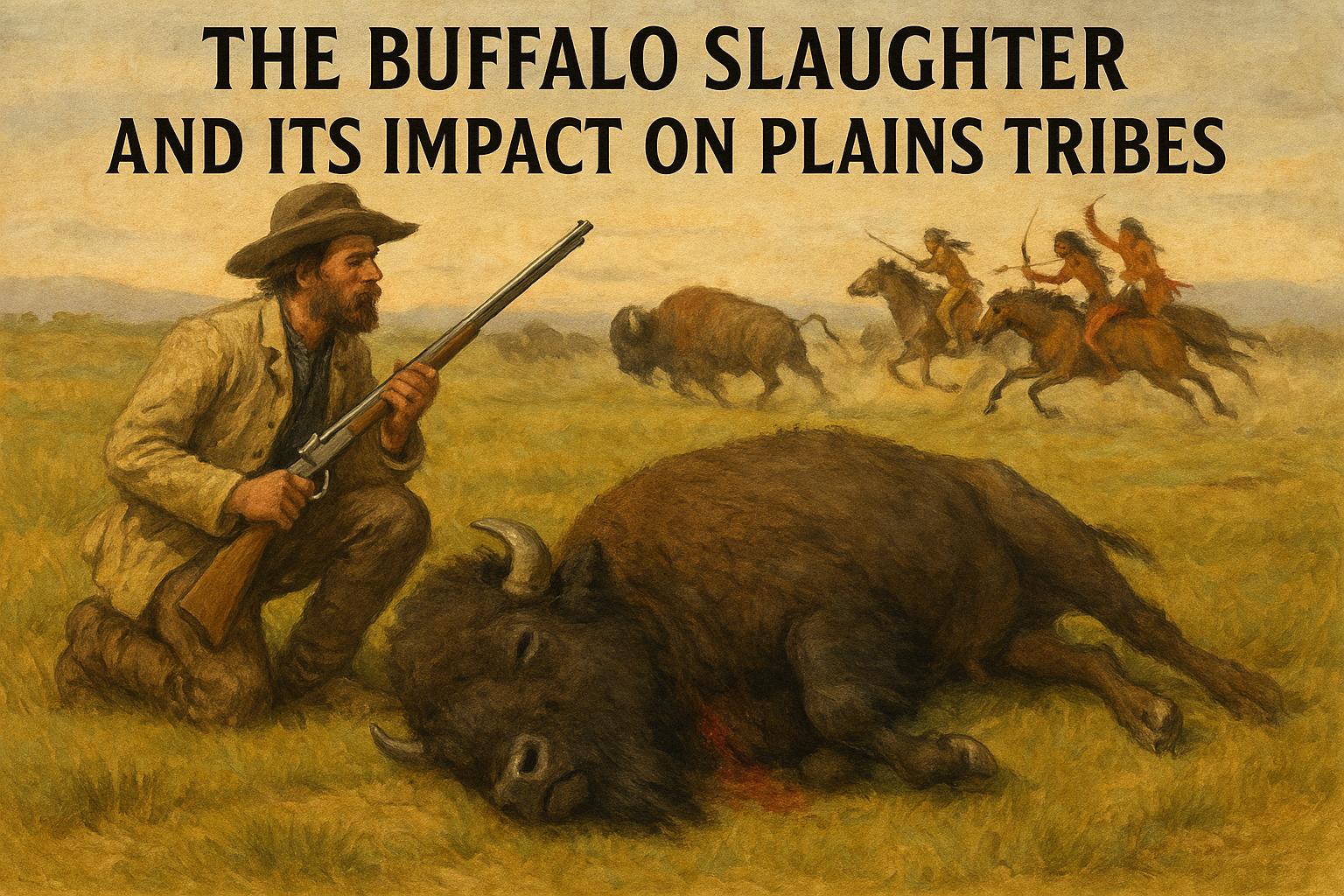
The Historical Context of Buffalo Slaughter
In the 19th century, the American West witnessed remarkable expansion and development. At the heart of this development was the mass slaughter of the American buffalo, or bison, a species that held tremendous significance for the Plains tribes. This era’s events carried profound implications for the cultural, environmental, and political landscapes of the region. Examining the historical context of buffalo slaughter reveals the depth and complexity of these impacts.
Importance of the Buffalo to Plains Tribes
For the indigenous Plains tribes, the buffalo was vastly more than just a food source. It was a cornerstone of their existence, playing a crucial role in their economic, cultural, and spiritual lives. The meat was a staple food, while hides were transformed into clothing and housing. Beyond the practical, buffalo held spiritual significance, and many tribes included buffalo in their rituals and belief systems. This comprehensive utilization of the buffalo reflects a sustainable approach honed over centuries, demonstrating how these communities harmonized with their environment.
Shift in Population Dynamics
The trajectory of buffalo populations shifted dramatically in the mid-1800s. Several factors converged during this period to trigger what would become a widespread slaughter. With the settlement of the American West by European settlers, accompanied by the expansion of the railroad, access to previously remote buffalo herds became significantly easier. This facilitated extensive hunting, driven in part by market demands for buffalo hides and ironically, by leisure hunting. The U.S. government further exacerbated this decline, using the buffalo slaughter as a strategy to weaken the Plains tribes’ ability to resist displacement.
Technological Advancements
The advent of the railroad not only provided hunters with unprecedented access to the West, but also allowed for the efficient transportation of buffalo products to markets in the East. This efficiency enabled hunting efforts to intensify, pushing buffalo populations toward near extinction. Additionally, advancements in firearms contributed to hunters’ ability to kill buffalo in large numbers, reinforcing the rapid decline. These technological changes highlight the intersection of industrialization and environmental impact.
Impact on the Plains Tribes
The impact on Plains tribes was immediate and severe. The buffalo’s decimation disrupted every facet of their society. The tribes lost their principal food source, essential materials for trade and survival, and an integral part of their cultural and spiritual life. The loss of buffalo populations forced many tribes to become reliant on government rations, undermining their autonomy. This loss not only challenged their physical survival but also contributed to the erosion of cultural practices intimately tied to buffalo hunting and processing.
Government Policies and Socio-Economic Effects
Federal policies during this time often pursued the assimilation of Native Americans into a Euro-American lifestyle. This meant suppressing traditional practices and compelling tribes to live on reservations far removed from their ancestral lands. By eliminating the buffalo, the U.S. government sought to diminish the Plains tribes’ resistance to this displacement. The socio-economic effects were profound; the forced transition disrupted established social structures, undermined economic independence, and weakened community bonds.
Long-Term Consequences
The ramifications of buffalo slaughter extend far beyond the 19th century, continuing to affect Plains tribes into the present day. The buffalo numbers have increased due to conservation efforts, and some tribes have undertaken initiatives to reintroduce buffalo to their lands. This revival effort symbolizes a reconnection with heritage and tradition, fostering cultural renewal and ecological restoration. The enduring importance of the buffalo is evident in the efforts by Plains tribes to heal both their communities and the environment, demonstrating resilience in the face of historical adversity.
Modern Revival and Cultural Significance
The restored presence of buffalo on tribal lands transcends ecological benefits, reinstating a cultural symbol of strength and identity. Initiatives surrounding the reintroduction of buffalo have become a unifying force within tribes, bridging generational gaps and celebrating indigenous knowledge and practices. Through educational programs and sustainable management efforts, tribes strive to incorporate traditional ecological practices with modern conservation science.
Symbol of Resilience
Buffalo now serve as a compelling symbol of resilience and recovery, emblematic of the broader movements for indigenous sovereignty and cultural preservation. By honoring the buffalo, tribes reaffirm their stewardship of the land and cultural practices, countering the historical narratives of loss with those of revival and resilience.
Understanding the historical context of buffalo slaughter provides a window into the broader themes of environmental exploitation, indigenous displacement, and cultural resilience. The reverence for the buffalo among Plains tribes underscores its pivotal role throughout history and its enduring significance today. For further information on the historical and cultural aspects of the buffalo slaughter and its implications for Plains tribes, you might consider visiting resources such as Smithsonian Magazine or the National Park Service, which offer comprehensive insights into this critical episode in American history.